3D Building Design: What Developers Need Before Breaking Ground
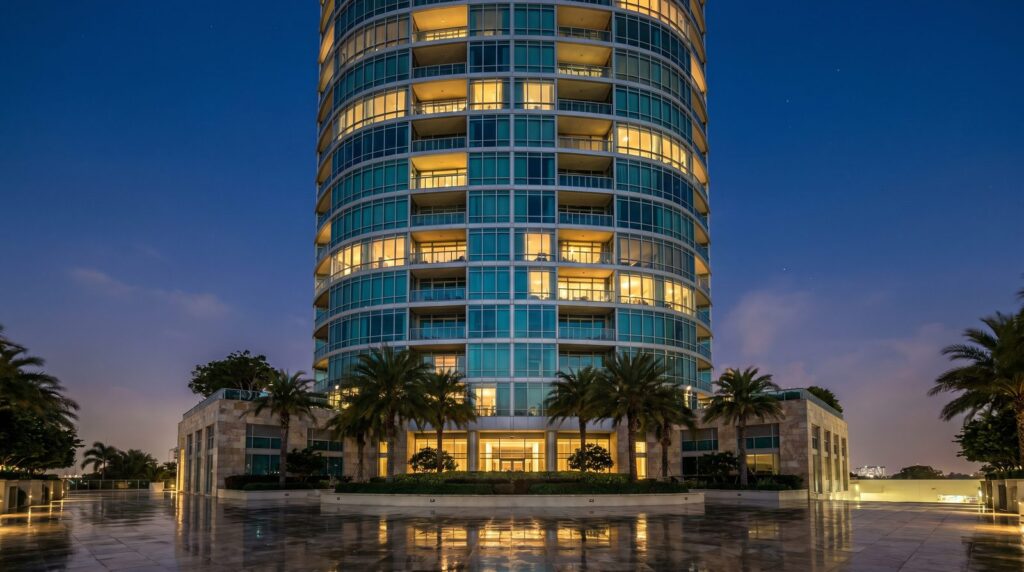
Before a shovel hits the ground, developers need a specific set of 3D building design deliverables — not just pretty pictures, but decision-grade visuals that satisfy lenders, planners, and presale buyers simultaneously. A well-structured visualization package includes exterior massing renders, aerial site context, interior unit representations, and a clear material/finish schedule — all produced from your architect’s working drawings at pre-construction stage. Get this right and you compress the capital-raise timeline, reduce RFI cycles with the planning department, and launch presales with confidence.
3D Building Design vs. 3D Building Rendering — Why the Difference Matters
Developers and architects sometimes use these terms interchangeably, but they describe different scopes of work. Understanding the distinction protects your budget and your timeline.
- 3D building design refers to the modeled geometry itself — the digital three-dimensional representation of a structure, often produced inside BIM or CAD software by the architect or design team. It is a working tool, not a finished visual.
- 3D building rendering is the process of applying photorealistic materials, lighting, landscaping, people, and sky to that geometry to produce a finished image or animation intended for human audiences — investors, planners, buyers.
For most developers, the deliverable you actually need is rendering — produced from the design model. Confusing the two leads to scoping errors: asking an architect to produce marketing-grade imagery (not their core service) or asking a visualization studio to redesign the building (not theirs). A specialist exterior rendering studio takes your existing design files and turns them into investor-ready visuals. That handoff is where most pre-construction value is created.
The Five Deliverables Developers Need at the Pre-Construction Stage
Not every project needs every visual. But the following five deliverables cover the full pre-construction communication surface — from the planning board to the presale website.
| Deliverable | Primary Audience | Key Requirement |
|---|---|---|
| Exterior massing renders (2–4 angles) | Investors, lenders, planning | Accurate to approved drawings; realistic context |
| Aerial / site-context render | Lenders, city planners, marketing | Shows relationship to streets, amenities, neighborhood |
| Interior unit renders (key unit types) | Presale buyers, marketing | Finish level, natural light, spatial feel |
| Amenity renders (lobby, pool, rooftop) | Presale buyers, HOA, marketing | Lifestyle storytelling, accurate to spec |
| Walkthrough animation or turntable | Investor decks, presale events | 60–90 seconds; narrated or scored |
Most mid-size residential or mixed-use developments can cover all five within a single visualization engagement. For smaller infill projects, exterior renders plus one or two interiors are often sufficient. See the full scope of what’s possible in our real estate rendering services.
How Exterior Massing Renders Accelerate Investor and Lender Buy-In
Capital partners and construction lenders are not architects. They cannot read a set of permit drawings and mentally reconstruct what the finished building will look like. Photorealistic exterior renders close that gap immediately.
Specifically, a strong exterior render package does three things in an investor meeting:
- Anchors the pro forma in physical reality. A lender reviewing a $40M construction loan needs to see that the density, unit mix, and massing are coherent. A render makes that argument faster than any written description.
- Signals project maturity. Developers who show up with polished visuals signal that the project is past concept stage — reducing perceived risk for equity partners.
- Enables presale velocity. Many lenders require a presale threshold before funding. Renders are the primary tool for achieving that threshold. Units that buyers cannot visualize do not sell.
Twilight and dusk renders are particularly effective in investor decks — they read as premium and photograph well for printed materials. An aerial perspective showing site context adds credibility by demonstrating how the project fits the neighborhood rather than existing in isolation.
Using 3D Building Visuals to Navigate Planning and Permit Approvals
Planning departments increasingly expect — and in some jurisdictions require — photorealistic visual simulations as part of a design review submission. Even where not required, submitting high-quality renders dramatically reduces the back-and-forth that slows conditional approvals.
Key considerations when producing renders for planning submissions:
- Accuracy over aesthetics. Planning boards care that the render matches the approved drawings. Any discrepancy between the render and the plans creates questions. Your visualization studio must work directly from your most current drawing set.
- Context matters. Include adjacent structures, street trees, and existing streetscape. Renders that show the building floating in a white void raise red flags with reviewers.
- Shadow studies. For urban infill or high-density projects, a shadow study sequence (showing shadow cast at different times of day and year) is often requested. This is a standard deliverable from a qualified studio.
- Material callouts. Some boards require renders annotated with material specifications. Confirm this requirement with your planning contact before briefing your studio.
Common Mistakes Developers Make When Ordering Building Renders
The most expensive mistakes in visualization happen before the studio starts work. Here are the patterns we see most often — and how to avoid them.
- Sending incomplete drawings. Renders produced from schematic-level drawings will need to be redone when the design develops. Brief a studio only when your drawings are at design development (DD) stage or later.
- Underspecifying the finish package. If you haven’t selected cladding materials, window profiles, or landscape species, the studio will make assumptions. Those assumptions may not match your vision — or your budget. Lock in a finish schedule before briefing.
- Ordering too few angles. Two exterior angles is rarely enough for a mixed-use building. Budget for the angles that cover street presence, the entry sequence, and any notable architectural feature. Trying to add angles mid-project costs more than planning them upfront.
- Treating renders as a final step. Renders should be ordered early enough to support capital raising and presales — not after construction financing is already closed. The ROI on pre-construction visualization is front-loaded.
- Choosing on price alone. A low-cost render that misrepresents the building’s scale, materiality, or context can create liability with buyers and credibility problems with lenders. Quality and accuracy are non-negotiable at this stage.
Cost Range for 3D Building Design Visualization in 2025
Visualization pricing scales with building complexity, number of deliverables, and turnaround requirements. The following ranges reflect typical US market rates for developer-grade, photorealistic work in 2025. For a project-specific estimate, see our 3D rendering cost guide.
| Deliverable | Typical Range (USD) | Notes |
|---|---|---|
| Single exterior still (standard) | $800 – $2,500 | Varies by complexity, entourage, revision rounds |
| Exterior package (3–5 angles) | $2,500 – $7,000 | Most common pre-construction scope |
| Aerial / site-context render | $1,200 – $3,500 | Higher if drone base photography is integrated |
| Interior still (per room) | $600 – $2,000 | Finish complexity and furniture spec drive cost |
| Walkthrough animation (60–90 sec) | $5,000 – $18,000+ | Depends on scene count, motion complexity, sound |
| Full pre-construction package | $8,000 – $25,000 | Exterior + aerial + interiors + amenities |
Rush fees (typically 20–35% premium) apply when turnaround is under five business days. Projects with complex geometry, custom curtain wall systems, or extensive landscape design sit at the higher end of each range.
Next Steps: Getting a Quote for Your Development
The fastest path to an accurate quote is a brief that includes your current drawing set (PDF or DWG), a finish schedule or material references, and a list of required angles or deliverables. The more complete your brief, the more precise — and competitive — the pricing you’ll receive.
If your drawings are still in progress, a preliminary conversation about scope and timeline is still valuable. Most studios can stage deliverables to match your capital-raise or planning submission schedule, so there’s no reason to wait until everything is finalized.
Ready to move forward? Request a quote from Ratio Visuals and receive a project-specific proposal within one business day.
Frequently Asked Questions
What file formats do I need to provide to get 3D building renders made?
Most visualization studios work from architectural CAD files (.dwg, .dxf), Revit models (.rvt), SketchUp files (.skp), or detailed PDF drawings with floor plans, elevations, and sections. The more dimensional information provided, the more accurate the render. Reference images for materials and finishes are equally important — they guide the studio’s texturing decisions.
How early in the development process should I commission building renders?
Ideally at design development (DD) stage — after schematic design is resolved but before construction documents are fully complete. This timing allows renders to support capital raising, planning submissions, and presale launches without requiring costly revisions if the design changes significantly.
Can renders be updated if the design changes after they’re delivered?
Yes, but revision scope matters. Minor changes — swapping a cladding color, adjusting window proportions — are typically handled within a revision allowance. Significant design changes (massing alterations, added floors, redesigned facades) are usually quoted as a separate revision fee because they require rebuilding geometry. Locking the design before briefing a studio minimizes this risk.
Do planning departments accept 3D renders as part of a design review submission?
In most US jurisdictions, yes — and in many urban markets, photorealistic renders or visual simulations are standard components of a design review package. Requirements vary by municipality. Some require specific viewpoints, shadow studies, or annotated material callouts. Confirm the exact requirements with your local planning department before briefing your studio so deliverables are scoped correctly from the start.
What’s the typical turnaround time for a pre-construction render package?
A standard exterior package (three to five angles) typically takes seven to fourteen business days from approved brief to first-draft delivery, depending on studio workload and project complexity. Interior renders run a similar timeline. Full packages including animation are generally quoted at three to six weeks. Rush delivery is available at most studios for time-sensitive investor or planning deadlines.