3D Rendering for Pre-Sales: A Developer’s Playbook
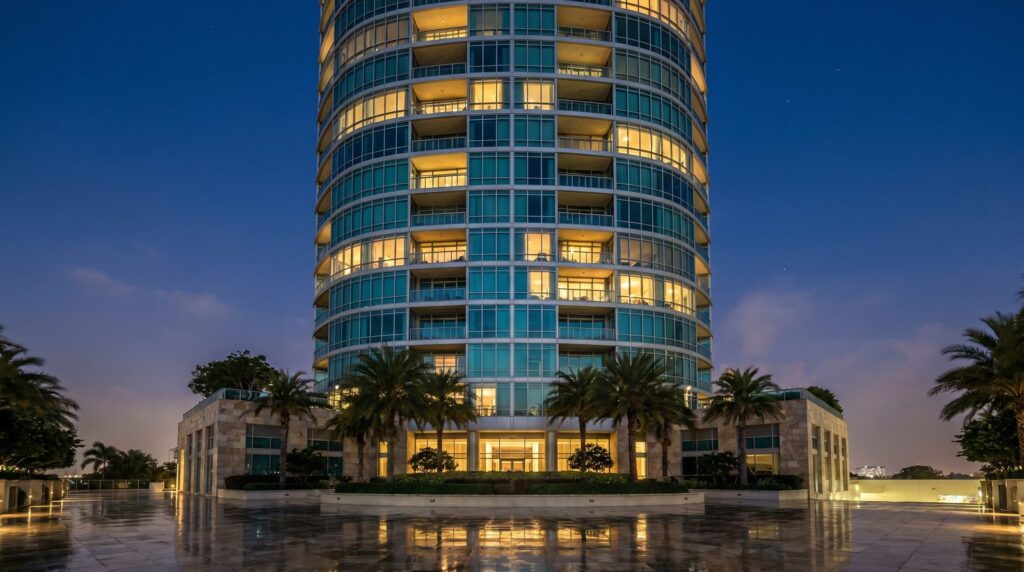
Real-estate developers use 3D rendering to sell or lease units before construction begins by giving buyers, investors, and lenders a photorealistic preview of a building that does not yet exist. The render types that drive the most buyer action are photorealistic exterior hero shots, staged interior renders, and short walkthrough animations — used together, they replace the model suite and sales gallery during the critical pre-sales window.
Why Pre-Sales Renders Work Before a Shovel Hits the Ground
Buyers cannot tour a building that has not been built. A photorealistic 3D render closes that gap by making the future feel present. When a prospect can see the lobby finish, the view from unit 12B, and the rooftop amenity deck in convincing detail, the purchase decision shifts from imagination to evaluation — a far shorter sales cycle.
The underlying mechanism is psychological concreteness. Vague floor plans leave buyers filling in blanks with worst-case assumptions. A photorealistic interior render of the primary suite — correct ceiling height, PBR-accurate stone countertops, natural light modeled to the building’s actual orientation — removes those blanks. Objections shrink because the product is visible.
From a practical standpoint, pre-sales commitments reduce construction financing risk. Many lenders require a minimum pre-sale threshold before releasing funds. High-quality renders are often the tool that gets a developer to that threshold without a physical sales center. Our studio has produced exterior and interior packages for multifamily and condo developers who used the renders as the sole visual collateral at launch — no model unit, no printed brochure beyond the renders themselves.
For a deeper look at how renders support condo launches specifically, see our guide to using 3D renders to pre-sell condo developments.
Which Render Types Close Pre-Sales Fastest: Exterior, Interior, or Animation?
No single render type closes deals alone — but interior renders of key unit types consistently drive the fastest buyer decisions, followed by exterior hero shots that anchor marketing campaigns, with animations serving a supporting role for high-value or complex projects.
Exterior Renders
The exterior hero shot — typically a dusk or golden-hour view of the building’s primary façade — is the marketing anchor. It appears on the project website, social ads, and hoarding boards. It answers “what will this building look like?” and establishes the project’s brand before anything else. For towers and mixed-use buildings, a second aerial view adds site context and communicates neighborhood positioning.
Interior Renders
Interior renders of the top two or three unit types (typically the studio or one-bed entry price point and the two-bed or penthouse aspirational unit) are what convert interest into deposits. Buyers are buying a lifestyle as much as square footage. A staged kitchen render with accurate cabinet profiles, countertop materials, and window light is more persuasive than any floor plan. We recommend at least two interior views per key unit type: a living/kitchen perspective and a primary bedroom or bathroom.
Animations and Walkthroughs
A 60–90 second walkthrough animation is most effective for projects with strong amenity stories — resort-style pools, co-working lobbies, rooftop decks — where still images cannot convey sequence and flow. Animations are also standard in luxury condo and mixed-use presentations where the asking price justifies a higher marketing spend. For leaner budgets, a still render package delivers more coverage per dollar.
| Render Type | Best Use Case | Pre-Sales Role | Lease-Up Role |
|---|---|---|---|
| Exterior Hero (day or dusk) | All project types | Website, hoarding, social ads | Listing platforms, signage |
| Aerial / Site View | Towers, masterplans, mixed-use | Investor decks, site context | Neighborhood positioning |
| Interior — Living / Kitchen | Multifamily, condo, BTR | Deposit conversion | ILS listings, leasing office |
| Interior — Bedroom / Bath | Residential, hospitality | Aspirational unit upsell | Upgrade tier marketing |
| Amenity Renders | Multifamily, hotel, mixed-use | Lifestyle differentiation | Renewal retention |
| Walkthrough Animation | Luxury condo, mixed-use | High-value buyer presentations | Virtual tours, ILS video |
| 3D Floor Plans | All residential types | Sales center, brochures | Leasing agent tool |
How to Use Renders in an Investor Deck or Lender Presentation
In an investor deck, 3D renders serve as proof of vision — they demonstrate that the development team has thought through the product in detail, which reduces perceived execution risk for equity partners and lenders.
The most effective investor decks lead with a single, striking exterior render on the cover slide, then use interior renders to illustrate unit mix and finish level, and close with an aerial or site render that shows neighborhood context and comparable assets. Lenders in particular respond to renders that communicate finish quality because it signals the developer’s ability to hit the pro forma’s price-per-square-foot assumptions.
Practical tips for investor-grade render packages:
- Use consistent lighting across all images. Mismatched lighting between exterior and interior renders signals a rushed package. Request a unified lighting brief from your studio.
- Show the amenity deck or lobby. Institutional investors in multifamily underwrite amenity quality as a retention driver. A single amenity render can answer questions before they are asked.
- Include an aerial view with site context. Lenders want to see proximity to transit, retail, and employment. A modeled aerial with surrounding buildings and roads communicates this faster than a map screenshot.
- Match finishes to the spec sheet. If your pro forma assumes a mid-grade kitchen package, the render should reflect it. Renders that show finishes above the actual spec create credibility problems during due diligence.
Our architectural rendering ROI guide covers how developers quantify the return on render investment across different deal structures.
What Does a Lease-Up Render Package Typically Include?
A lease-up render package is designed to fill units in a newly completed or nearly complete building, often before a certificate of occupancy is issued. It typically includes exterior and interior renders optimized for internet listing services (ILS), leasing office displays, and digital advertising.
A standard lease-up package for a multifamily building covers:
- Exterior hero render — the building’s primary façade, used on the ILS listing and the project website.
- Interior renders by unit type — one or two perspectives per floor plan offered (studio, one-bed, two-bed). These appear directly on listing platforms and are the primary driver of tour bookings.
- Amenity renders — pool, fitness center, co-working lounge, rooftop, or whatever differentiates the building in its submarket. These are used in social advertising and the leasing brochure.
- 3D floor plans — dimensioned, furnished overhead views of each unit type. Renters increasingly expect these on ILS listings; properties that include them see higher click-through rates.
- Lifestyle or landscape renders — outdoor living areas, courtyards, or streetscape views that reinforce the building’s neighborhood positioning.
For build-to-rent communities and garden-style apartments, a landscape or pool render often does more work than additional interior views, because the outdoor amenity is the primary differentiator versus competing properties. See our real estate rendering services for the full range of deliverables we produce for lease-up campaigns.
How Early in the Design Process Can You Commission Renders?
Renders can be commissioned as early as schematic design (SD) — typically when you have a massing model, a site plan, and a preliminary floor plan. You do not need construction documents or a finalized spec sheet to start.
The practical minimum to begin is:
- A 3D massing model or AutoCAD/Revit file showing building footprint, height, and major facade articulation
- A site plan or survey showing orientation, setbacks, and adjacent context
- A finish direction — even a rough moodboard of materials, colors, and style references
- A floor plan for each unit type you want rendered (PDF is fine at early stages)
Commissioning at SD stage gives you renders in time for your capital raise and pre-sales launch, rather than waiting until design development (DD) is complete. The trade-off is that early-stage renders require revision rounds as the design evolves. A good studio builds this into the workflow — we typically run one or two design-sync checkpoints during production on early-stage projects to catch facade or floor plan changes before they require a full re-render.
For a full breakdown of what to provide at each design stage, our ultimate guide to architectural rendering covers the briefing process in detail.
How Developers Measure ROI on a Pre-Sales Render Package
ROI on a render package is measured against the cost of the alternative: delayed pre-sales, a physical sales center, or a missed lender threshold. The render package wins on cost and speed in nearly every scenario.
The most common ROI frameworks developers use:
Pre-Sales Velocity
How many units were reserved in the first 30–60 days of launch? Developers who launch with a full render package — exterior hero, key interior views, amenity renders, 3D floor plans — consistently report faster early reservation velocity than those who launch with floor plans only. Faster pre-sales reduce the carrying cost of the land and shorten the time to construction financing release.
Sales Center Displacement
A physical sales center with a model suite costs significantly more than a comprehensive render package — in build-out, staffing, and ongoing maintenance. Many developers, particularly on smaller infill condo projects, now skip the model suite entirely and use renders plus a digital sales experience. The render package cost is a fraction of the model suite cost, and the renders are available from day one of marketing rather than weeks after launch.
Lender and Investor Confidence
A well-produced render package can be the difference between a capital raise that closes in one meeting versus one that requires multiple follow-ups. While this ROI is harder to quantify precisely, developers consistently report that professional renders reduce the number of “show me more” requests from equity partners and lenders.
Marketing Asset Longevity
Renders produced for pre-sales continue generating value through lease-up, resale, and future phases of a development. An exterior render used in the pre-sales campaign can be repurposed for ILS listings, Google Display ads, and the developer’s own portfolio — extending the useful life of the original investment.
What to Ask Your Rendering Studio Before Signing Off on a Pre-Sales Package
Choosing the right studio is as important as the render brief itself. The wrong studio produces images that look unconvincing to buyers — and unconvincing renders can actively harm a pre-sales campaign by making the project feel unfinished or low-quality.
Ask these questions before committing:
- Can you show me comparable projects? Ask for renders from similar building types — if you are developing a mid-rise multifamily, ask for multifamily examples, not single-family homes. Photorealism varies significantly by building type and complexity.
- What file formats and resolutions do you deliver? Pre-sales renders need to be print-ready (300 DPI minimum) for brochures and large-format signage, and web-optimized for digital campaigns. Confirm both are included.
- How do you handle design changes mid-production? Early-stage projects change. A studio with a clear revision policy and checkpoint process will save you money and time when the facade material or window grid shifts in DD.
- What is your turnaround time, and what is the critical path? Pre-sales launches are calendar-driven. Understand the studio’s production timeline and what inputs from your team are on the critical path (model files, finish selections, site photos).
- Do you model from scratch or require a pre-built 3D model? Some studios require a polished Revit or SketchUp model as input; others build the scene from your 2D drawings. Know which applies — it affects your preparation time and cost.
- How are licensing and usage rights structured? Confirm you receive full commercial usage rights for all marketing channels, with no per-use licensing fees.
Ready to scope a pre-sales render package? Contact Ratio Visuals to discuss your project timeline, unit mix, and the deliverables that will move your campaign fastest.
Frequently Asked Questions
How many renders does a typical pre-sales package include?
Most residential pre-sales packages include two to four exterior views, two to three interior views per key unit type, one or two amenity renders, and 3D floor plans for each floor plan offered. The exact count depends on the number of unit types, the project’s marketing budget, and how many channels the renders need to cover — digital, print, and signage often have different format requirements.
Can 3D renders be used for both pre-sales and lease-up on the same project?
Yes, and this is common practice. Pre-sales renders are produced to show the building before construction; the same assets are then repurposed for lease-up once the building is delivered. Minor updates — refreshed lighting, updated landscaping, or new amenity views — can extend the original package for lease-up without a full re-render, reducing total marketing spend across the project lifecycle.
What is the difference between a pre-sales render and a marketing render?
The terms are often used interchangeably, but pre-sales renders specifically target buyers or tenants before a building is complete, while marketing renders is a broader category that includes renders for completed buildings, renovation projects, and repositioning campaigns. Pre-sales renders typically require more attention to design accuracy because they set buyer expectations that must be met at delivery.
How long does it take to produce a pre-sales render package?
A standard exterior and interior package — covering the key views needed for a launch campaign — typically takes two to four weeks from receipt of complete project files. Complex projects with multiple building types, detailed landscaping, or animation components take longer. Commissioning renders as early as schematic design gives you the most schedule buffer before your planned launch date.
Do renders need to be updated as the design changes during construction documents?
Minor design changes — material swaps, window adjustments, landscaping refinements — can usually be updated in existing render scenes without a full re-render, depending on how significant the change is. Major changes to massing, facade articulation, or floor plan layout may require a new production pass. Establishing a clear change-management process with your studio at the start of the project prevents surprises later.
Last updated: August 2026