Architecture 3D Renders: The Developer’s ROI Guide
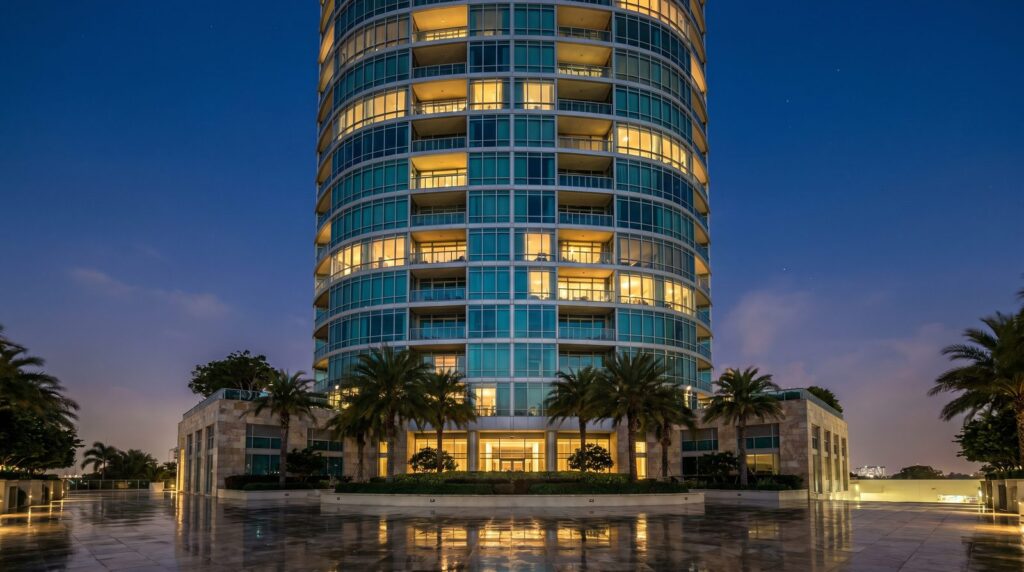
Architecture 3D renders help developers sell and lease real estate faster by letting buyers visualize a finished building before a single foundation is poured. High-quality photorealistic imagery closes the gap between a floor plan and an emotional buying decision — compressing sales cycles, supporting pre-sale campaigns, and giving marketing teams assets they can use across every channel from day one. When the renders are done right, they don’t just look good; they actively reduce risk and accelerate revenue.
What an Architecture 3D Render Delivers (Beyond a Pretty Image)
Most developers first think of renders as a substitute for photography on a project that isn’t built yet. That’s true, but it understates the value. A well-executed architecture 3D render functions as a sales tool, a permitting aid, a stakeholder alignment document, and a brand statement — simultaneously.
Here’s what a photorealistic render actually puts on the table:
- Pre-sale velocity: Buyers and investors commit to units before construction completes, reducing carrying costs and de-risking the project financially.
- Permitting support: Planning boards and zoning committees respond to context-accurate visualizations far more readily than CAD drawings.
- Stakeholder alignment: Renders eliminate misinterpretation between architects, developers, and contractors — everyone works from the same visual reference.
- Marketing-ready assets: One render set produces hero images for brochures, websites, social campaigns, billboards, and investor decks without a separate shoot.
- Design validation: Seeing the project in photorealistic light reveals material clashes, proportion issues, and landscaping gaps before they become expensive field changes.
The ROI isn’t abstract. Faster pre-sales mean earlier draw-downs. Fewer change orders mean tighter budgets. Better marketing assets mean lower cost-per-lead. Each of these outcomes traces back to the quality of the visual.
Exterior vs. Interior vs. Aerial: Which Render Type Moves the Needle
Not every project needs every render type. Choosing the right combination for your specific sales goal is where budget gets allocated intelligently.
| Render Type | Best For | Primary Audience | Key Deliverable |
|---|---|---|---|
| Exterior Rendering | Curb appeal, brand identity, permit submissions, hero marketing image | Buyers, planning boards, lenders | Photorealistic street-level or elevated view with accurate landscaping and lighting |
| Interior Rendering | Unit sales, finish selection, model-unit replacement, hospitality concepts | End buyers, tenants, interior design clients | Room-level views showing materials, furniture, and natural light |
| Aerial / Bird’s-Eye Rendering | Master-planned communities, mixed-use sites, investor presentations | Institutional investors, municipalities, large-scale buyers | Site context, massing relationships, amenity layout |
| Twilight / Dusk Rendering | Luxury residential, hospitality, high-end retail | Affluent buyers, lifestyle-driven purchasers | Warm ambient lighting that communicates premium positioning |
For most residential developments, a combination of one strong exterior hero shot, two to three interior views of the highest-value spaces (primary suite, kitchen, living area), and a site aerial covers the full sales funnel. Hospitality and mixed-use projects typically require a broader set given the number of stakeholder groups involved.
How Developers Use Renders at Each Stage — Pre-Sale, Permitting, and Marketing
The most efficient developers treat renders as a phased asset, not a one-time deliverable. Each project stage has distinct visual needs.
Pre-Sale and Investor Rounds
At this stage, the goal is conviction. Investors need to see the vision clearly enough to commit capital. Buyers need to feel the lifestyle. Renders here should emphasize quality of finish, site context, and the emotional experience of living or working in the space. A single compelling exterior image paired with two or three interior views is often enough to anchor an early-stage deck or sales microsite.
Permitting and Entitlement
Planning departments evaluate neighborhood fit, massing, and material compatibility. Context-accurate renders — showing the building set against the real streetscape, with accurate shadow studies if required — dramatically reduce back-and-forth with review boards. Many developers report fewer revision cycles when renders are submitted alongside technical drawings.
Active Marketing Campaign
Once the project is launched publicly, renders need to perform across multiple formats: print brochures, digital ads, email campaigns, signage, and the project website. This is where having a properly lit, high-resolution render set pays back the investment repeatedly. A single well-produced image can be cropped, color-graded, and repurposed dozens of times without losing quality. See how real estate rendering supports full-campaign asset production.
What Photorealistic Quality Actually Requires From Your Studio
Not all renders are created equal, and the gap between a competent render and a truly photorealistic one is visible immediately to buyers who have seen both. Quality at the highest level depends on several non-negotiable inputs.
- Accurate geometry: The model must match the architectural drawings precisely. Shortcutting this step produces renders that mislead buyers and create legal exposure.
- Physically based materials: Concrete, glass, wood, and stone must behave the way light actually interacts with those surfaces — not a flat texture map approximation.
- Lighting that matches the site: Sun angle, time of day, and sky conditions should reflect the actual project location and the emotional tone the marketing strategy requires.
- Contextual environment: Surrounding buildings, mature landscaping, vehicles, and people ground the render in reality. A building floating in a white void reads as unfinished to a sophisticated buyer.
- Post-production discipline: Color grading, lens effects, and atmospheric depth are applied with restraint — enhancing realism, not masking weak underlying work.
Studios that cut corners on any of these inputs produce images that look fine at a thumbnail but fall apart at full resolution — exactly where buyers and investors are looking most closely.
Typical Turnaround Times and What Affects Them
Turnaround is one of the most practical questions developers ask, and the honest answer depends on project complexity and how complete the source files are at briefing.
| Render Type | Typical Turnaround | Primary Variables |
|---|---|---|
| Single exterior still | 5–8 business days | Model complexity, number of revision rounds, material specification completeness |
| Interior still (per room) | 4–7 business days | Furniture sourcing, finish selections, lighting complexity |
| Aerial / site render | 7–12 business days | Site size, surrounding context detail, number of buildings modeled |
| Full project package (exterior + interiors + aerial) | 12–20 business days | Scope, revision cycles, client feedback speed |
The single biggest factor that extends timelines isn’t the studio — it’s incomplete or inconsistent source material. Providing finalized drawings, confirmed material selections, and a clear brief at kickoff can significantly reduce turnaround compared to projects where those elements arrive piecemeal.
How to Brief Your Studio for Maximum ROI
A strong brief is the highest-leverage thing a developer can do before a render project starts. Studios work faster and produce better results when the creative direction is unambiguous from day one.
A complete brief includes:
- Architectural drawings: Floor plans, elevations, and sections in CAD or Revit format. PDFs are acceptable as a starting point but slow the modeling phase.
- Material schedule: Confirmed finishes for all visible surfaces — cladding, glazing, roofing, paving, and landscaping species where relevant.
- Camera positions: Reference images or sketched viewpoints showing which angles matter most for the sales story.
- Time of day and lighting mood: Daylight, golden hour, dusk, or night — each communicates a different brand position.
- Intended use: Print dimensions, digital formats, and whether the image will be used in a regulated sales context (some jurisdictions have disclosure requirements for pre-sale imagery).
- Comparable references: Three to five images that represent the visual quality and style you’re targeting. This calibrates expectations more precisely than any written description.
For guidance on budget planning before you brief, the 3D rendering cost guide covers what drives pricing across different project types.
What to Expect From Ratio Visuals on Your Next Project
Ratio Visuals produces developer-grade architectural visualization for residential, commercial, and mixed-use projects across the United States, with a primary base in Tampa, Florida. Every project is handled with a direct point of contact, structured revision rounds, and deliverables sized for both print and digital use from the outset.
The workflow is straightforward: you provide drawings and a brief, we model and light the project, you review a work-in-progress render before final production, and you receive high-resolution files ready for immediate marketing use. No handoffs between departments, no junior-team bait-and-switch.
Whether you need a single hero exterior for a pre-sale campaign or a complete visual package covering exterior, interior, and aerial views, the scope is scoped to your timeline and budget — not a fixed package that doesn’t fit your project. Explore how we support real estate developers from concept through construction.
Frequently Asked Questions
At what stage of a project should I commission architecture 3D renders?
The earlier the better, with one caveat: drawings need to be far enough along that the design is stable. Most developers commission renders once schematic design is complete and major design decisions are locked. Commissioning too early means paying for revisions as the design evolves; waiting until construction documents are finalized means losing months of potential pre-sale time.
How many renders do I actually need for a residential pre-sale campaign?
For a typical mid-size residential development, a core set of one exterior hero, one aerial, and three to four interior views covers most marketing channels effectively. Larger mixed-use or master-planned projects typically require a broader set to address the range of buyer profiles and stakeholder audiences. Start with the views that drive the most sales conversations and expand from there.
What file formats are delivered, and can renders be used for print?
Professional studios deliver high-resolution TIFF or PNG files at print-ready resolution (typically 300 DPI at the intended output size) alongside web-optimized JPEGs. If you know the largest format you’ll print — a billboard, a sales center wall graphic, a brochure spread — communicate that at briefing so the render is produced at sufficient resolution from the start.
How do architecture 3D renders differ from AI-generated images?
AI-generated images are produced from text prompts and have no relationship to your actual architectural drawings. They cannot accurately represent your specific building, materials, or site. Architecture 3D renders are built from your CAD or Revit files, meaning every dimension, material, and spatial relationship is accurate — which matters for sales compliance, permitting submissions, and buyer trust.
What’s the difference between a standard render and a photorealistic render?
A standard render uses basic lighting and material approximations to communicate form and layout. A photorealistic render uses physically based rendering engines, accurate sun and sky simulation, high-detail material libraries, and post-production refinement to produce an image that is genuinely difficult to distinguish from photography. For marketing purposes — where the image is the first impression a buyer has of your project — photorealistic quality is the appropriate standard.