Which Render Types Drive the Most Pre-Sale Contracts?
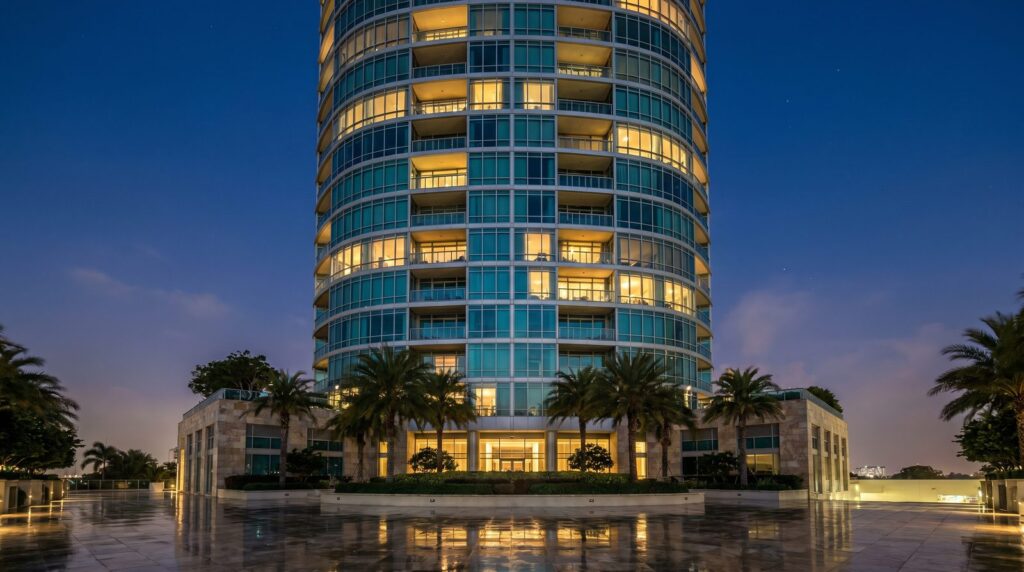
For pre-sale contracts, exterior hero renders and interior lifestyle renders do the heaviest lifting — they answer the two questions every buyer asks first: “What does it look like from the street?” and “Can I picture myself living here?” Aerial site renders and animated walkthroughs amplify both, but the exterior/interior combination is the baseline that consistently moves contracts before a building is built.
Why Render Type Matters More Than Render Count
Developers sometimes assume that more renders automatically means more sales. In practice, the type of render — and the story it tells — determines whether a prospect signs or walks. Each render format answers a specific buyer question. Matching the right format to the right decision stage is what converts interest into deposits.
The Four Render Types That Move Pre-Sale Contracts
1. Exterior Hero Renders (Day & Dusk)
The exterior hero is the single most important render in any pre-sale package. It anchors every marketing channel — the listing page, the sales brochure, social ads, and the sales office wall. A well-executed dusk or golden-hour exterior render communicates quality, neighborhood fit, and architectural ambition simultaneously. In our exterior work, dusk lighting is consistently the version developers use as their lead image because the warm artificial light against a blue-sky gradient reads as aspirational without feeling unrealistic.
For condo towers and multifamily projects, a street-level exterior showing the entry experience and façade materiality is non-negotiable. For single-family and townhouse developments, a slightly elevated three-quarter angle that shows the lot, landscaping, and streetscape context converts best — buyers are purchasing a lifestyle address, not just a floor plan.
Learn more about what goes into a high-performing exterior render on our exterior rendering services page.
2. Interior Lifestyle Renders (Kitchen, Living, Primary Suite)
Interior renders close the emotional gap that floor plans cannot. A buyer can read a floor plan and understand square footage; they cannot feel the ceiling height, the quality of the stone, or the way afternoon light falls across the kitchen island. That feeling is what drives a deposit.
The three rooms that appear most consistently in high-converting pre-sale packages are the kitchen, the primary suite, and the main living area. These are the spaces buyers photograph first on a show-home visit — so they are the spaces that need to be shown before the show home exists. In our interior projects, photorealistic PBR (physically based rendering) materials — accurate stone veining, matte vs. gloss cabinetry, linen textures — are what separate a render that looks “computer-generated” from one that gets mistaken for a photograph.
See how we approach finish accuracy and staging on our interior rendering services page.
3. Aerial & Site Context Renders
Aerial renders answer the question buyers rarely ask aloud but always think: “Where exactly is this, and what’s around it?” For urban infill projects, an aerial showing proximity to transit, parks, and retail is a trust-builder. For master-planned communities or waterfront developments, an aerial communicates scale and context that no street-level render can replicate.
Investor and institutional buyers rely on aerial renders even more heavily than end-users — they are evaluating the site as an asset, and an accurate aerial with surrounding context signals that the developer understands the market. Our aerial and masterplan work often feeds directly into investor decks and planning presentations before it ever reaches the public marketing suite.
Explore how aerials fit into a full pre-sales package on our real estate rendering page.
4. Animated Walkthroughs (Selective Use)
A 60–90 second architectural walkthrough is not the right tool for every project, but for luxury residential, mixed-use, and large multifamily developments it can be the asset that drives the most qualified leads. Video is shareable in ways that still images are not — it performs on social, on YouTube pre-roll, and as the centerpiece of a launch-event presentation.
The key is selectivity. Animation adds production time and cost; deploying it on a project where stills would suffice dilutes the budget. Where it earns its place is in projects where the sequence of spaces — arriving, entering the lobby, moving through the amenity floor, stepping onto a terrace — is itself part of the sales story. That narrative arc is impossible to tell in a single still.
Render Type by Project Category
| Project Type | Primary Render | Supporting Renders | Optional Upgrade |
|---|---|---|---|
| Luxury single-family / custom home | Exterior hero (dusk) | Kitchen, primary suite, outdoor living | Walkthrough animation |
| Condo tower / high-rise | Exterior hero (day + dusk) | Lobby, amenity floor, unit interiors | Aerial site context, animation |
| Townhouse / low-rise multifamily | Streetscape exterior | Kitchen, living room, 3D floor plan | Aerial overview |
| Master-planned community | Aerial / masterplan render | Streetscape, amenity exteriors | Animation, landscape renders |
| Commercial / mixed-use | Exterior hero (street-level) | Aerial, lobby/retail interior | Walkthrough, investor-deck aerials |
| Hospitality / resort | Exterior hero + pool/amenity | Suite interior, restaurant, lobby | Animation, landscape/pool renders |
Landscape and Pool Renders: The Underused Closer
Outdoor living renders are consistently underrepresented in pre-sale packages relative to the role outdoor space plays in purchase decisions — especially in Sun Belt markets like Florida, Texas, and Arizona. A photorealistic pool, terrace, or outdoor kitchen render answers a question that is genuinely hard to communicate any other way: “What does it feel like to be outside here at 7 PM?”
In our landscape and pool projects, the renders that perform best in marketing are evening or late-afternoon shots where pool lighting, string lights, and ambient exterior illumination create a mood that reads immediately as desirable. These images travel well on Instagram and Pinterest, generating organic reach that purely architectural renders rarely achieve.
See examples of this work on our landscape rendering services page.
What Determines How Many Renders You Actually Need?
The right render count depends on project scale, sales channel, and budget — not on a fixed formula. A single-family custom home may need four to six renders to cover the key selling angles. A 200-unit condo tower launching with a full marketing suite may need twenty or more across multiple unit types and common areas. The variables that drive scope are: number of distinct unit types, number of exterior angles with meaningful differentiation, complexity of the amenity program, and whether the project needs investor-facing materials separate from consumer-facing ones.
For a transparent breakdown of what drives rendering investment, see our 3D rendering cost guide.
Frequently Asked Questions
What is the most important render type for a pre-sale launch?
The exterior hero render — typically a dusk or golden-hour view of the building’s primary façade — is the single most important asset. It anchors all marketing channels and is usually the first image a prospective buyer sees. Without a compelling exterior render, interior and aerial renders have less context to land in.
Do I need an animated walkthrough to sell pre-construction condos?
Not always. Stills handle the majority of pre-sale marketing effectively. Animation earns its place on larger multifamily, luxury, and mixed-use projects where the sequence of spaces is itself a selling point, or where the launch event or social campaign demands video content. For smaller projects, a strong set of stills delivers better ROI.
How many interior renders should a pre-sale package include?
For most residential projects, three to five interior renders covering the kitchen, primary suite, and main living area cover the highest-priority buyer questions. Projects with multiple distinct unit types or a strong amenity program — gym, lobby, rooftop — may justify additional views for each differentiated space.
Are aerial renders worth the investment for smaller developments?
For urban infill and waterfront projects, yes — even at modest scale, an aerial that shows site context and proximity to amenities builds buyer confidence. For suburban single-family or small townhouse projects where the surrounding context is less of a selling point, the budget is usually better spent on additional interior or landscape renders.
What render types work best for investor presentations?
Aerial and masterplan renders combined with exterior hero shots are the most effective for investor-facing materials. Investors are evaluating the site as an asset and want to understand scale, context, and market positioning quickly. A clean aerial with accurate surrounding context signals developer credibility more efficiently than interior renders alone.
Last updated: July 2026
Ready to build a pre-sale render package for your next project? Contact the Ratio Visuals studio to discuss scope, timeline, and the render types that will work hardest for your specific development.