3D Render vs Photography: Which Sells Real Estate Listings?
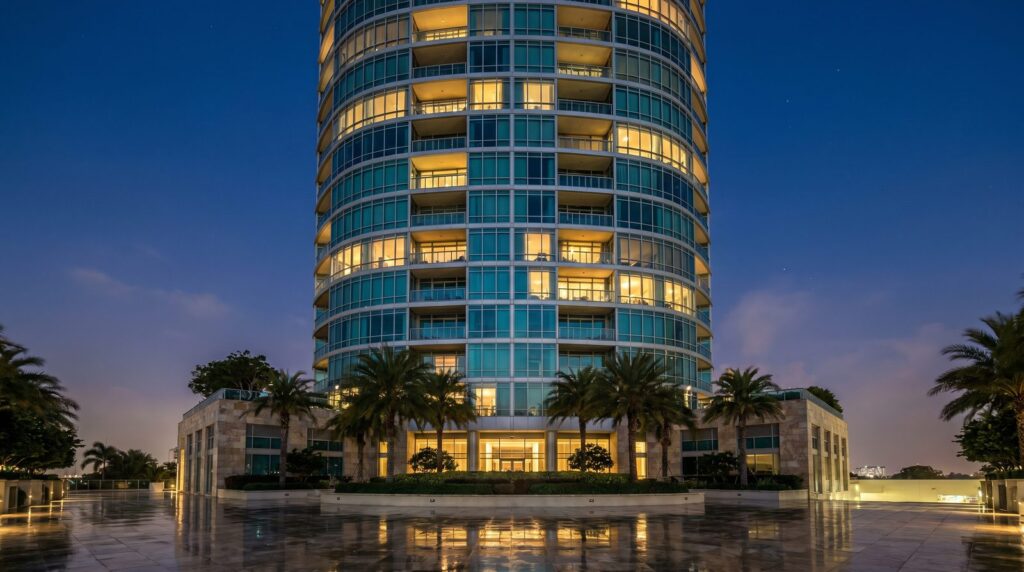
For unbuilt or pre-sale properties, a 3D render almost always outperforms photography — because there is nothing yet to photograph. For completed properties, professional photography is faster and often sufficient, but renders still win when you need perfect lighting, staged finishes, or marketing assets before construction wraps. The right answer depends on where your project sits in its lifecycle.
What’s the Core Difference Between a Render and a Photo?
A render is a computer-generated image built from architectural drawings, material specifications, and lighting data. A photograph captures what physically exists under real-world conditions. That distinction drives every practical difference between the two formats.
With a render, every variable is controlled: sun angle, sky condition, interior finishes, landscaping, and even the people walking past. With a photograph, you control the camera and the moment — but you are bound by what is actually there. A muddy construction site, a grey overcast day, or a half-finished lobby cannot be photographed into something it is not.
From a production standpoint, renders are created digitally from CAD files or PDFs and delivered as high-resolution images or animations. Photography requires a physical shoot, which means the building must exist, be accessible, and be presentable. That single constraint shapes almost every use-case decision a developer needs to make.
When Does a 3D Render Outperform Photography?
Renders outperform photography in any situation where the physical asset is unavailable, incomplete, or not yet at its best — which covers the majority of high-stakes developer marketing moments.
- Pre-sales and pre-leasing: Renders are the only option when ground has not yet broken. Developers using real-estate marketing renders routinely open sales before a single wall is framed.
- Investor decks and entitlement packages: A photorealistic exterior or aerial render communicates design intent with far more precision than a site plan or elevation drawing.
- Perfect lighting, every time: In our exterior work, a dusk render with warm interior glow and a gradient sky consistently outperforms a flat midday photograph in ad click-through — because the image is composed for emotion, not just documentation.
- Finishes that don’t exist yet: Interior renders let buyers visualise the kitchen with quartz countertops, the bathroom with large-format tile, and the living room with the upgraded flooring package — all before a single cabinet is installed.
- Multiple unit types from one shoot budget: A single photography session covers one unit at one moment. Renders can show every floor plan, every finish option, and every orientation across a whole building for a comparable or lower total spend.
- Landscape and outdoor living: Mature trees, resort-style pools, and finished hardscape take years to reach photogenic maturity. A landscape render shows the completed vision on day one of marketing.
When Is Photography the Right Call Instead?
Photography is the stronger choice when a completed, well-staged property needs to be documented quickly and accurately for MLS listings, press, or owner marketing materials.
For resale residential, a skilled real-estate photographer with good natural light and basic HDR processing produces compelling listing images at a fraction of the cost and timeline of a render. The building exists, the finishes are real, and buyers expect to see the actual space.
Photography also wins for:
- Lifestyle and neighbourhood context: Real street scenes, actual amenity spaces in use, and genuine community moments cannot be replicated by a render without significant time and cost.
- Regulatory compliance: Some jurisdictions require that listing images represent the property as-built, not as-designed. Check local advertising rules before using renders in MLS fields.
- Speed for completed assets: A professional shoot can be scheduled, executed, and delivered in days. A high-quality render typically takes one to three weeks depending on complexity and revision rounds.
- Occupied or furnished units: If a model unit is fully staged and the property is ready to show, photography of that real space often outperforms a render of the same room because buyers respond to tangible proof.
How Do Renders and Photos Compare on Cost and Timeline?
Both formats carry real costs, and the right comparison is total marketing value per asset — not just the line-item fee.
| Factor | 3D Render | Professional Photography |
|---|---|---|
| Requires completed building | No | Yes |
| Typical delivery timeline | 1–3 weeks per image | 1–5 days post-shoot |
| Lighting control | Total (any time of day, any weather) | Limited to shoot-day conditions |
| Revision flexibility | High — change finishes, landscaping, sky | Low — reshooting is required for major changes |
| Scalability across unit types | High — each variant is a new render | Low — each variant needs a separate shoot |
| Cost drivers | Building complexity, view count, lighting passes, animation length | Shoot duration, travel, retouching, number of spaces |
| Reusability | Very high — same assets used across ads, brochures, signage | Moderate — tied to the property’s current state |
| Best for | Pre-sales, investor decks, off-plan marketing | Completed listings, resale, press |
For a full breakdown of what drives rendering investment, see our 3D rendering cost guide.
Which Format Performs Better in Real Estate Ads and Listings?
In paid digital advertising for new-construction and pre-sale properties, high-quality renders consistently outperform standard photography — primarily because renders can be optimised for the medium, not just the property.
A render can be composed with the hero view, the ideal lighting, and a clean sky specifically designed to stop a scroll. A photograph of the same building on a cloudy Tuesday morning cannot be art-directed in the same way. In our experience producing assets for US developer campaigns, dusk and twilight renders with warm interior glow tend to generate the strongest engagement on Meta and Google Display placements — the image reads as aspirational rather than documentary.
For MLS and Zillow-style listing portals, the dynamic shifts. Buyers browsing completed inventory expect real photographs. A listing composed entirely of renders for a finished property can trigger scepticism. The highest-performing listings for completed new-construction often combine both: renders for the hero image and unbuilt units, photography for the model unit and amenity spaces that are ready to show.
Learn more about how to integrate visuals into a full campaign in our guide on how to use 3D renders in real estate marketing.
Can You Use Renders and Photography Together?
Yes — and for most mid-to-large new-construction projects, a blended strategy is the strongest approach.
The typical sequencing we see from experienced US developers looks like this:
- Pre-construction: Full render suite — exterior hero, interior lifestyle views, aerial site context, and a 3D floor plan. These carry the sales centre, website, and paid ads from launch through to construction completion.
- Construction complete, model unit ready: Professional photography of the model unit and amenity spaces. These replace or supplement renders in the MLS listing and on-site sales materials.
- Post-occupancy: Lifestyle photography of residents and activated amenity spaces for lease-up marketing and brand storytelling.
Renders and photography are not competitors in this workflow — they serve different stages of the buyer journey. Renders sell the vision; photography confirms the delivery. Both matter.
What US Developers Are Choosing in 2026
Across the US development market in 2026, the trend is clear: render-first marketing has become standard practice for any project with a pre-sales or pre-leasing phase, regardless of project scale. The availability of faster render pipelines and more accessible visualization studios has lowered the barrier significantly.
What has changed is the quality bar. Buyers and renters who have been exposed to photorealistic renders for years are now sophisticated enough to spot a low-quality render — and a poor render can damage credibility faster than no render at all. Studios that use physically-based rendering (PBR) materials, accurate global illumination, and properly calibrated camera settings produce images that hold up against photography at a glance.
For multifamily, mixed-use, and luxury residential projects, the expectation is now a full visual package: exterior hero renders, interior lifestyle views, an aerial or site render for context, and a 3D floor plan. Photography supplements this package once the asset is delivered. For a detailed look at how the render-versus-photography decision plays out across project types, see our rendering vs photography guide.
If you are planning a new-construction marketing campaign and want to understand which assets make the most sense for your project stage and budget, contact the Ratio Visuals team for a straightforward conversation — no pitch, just a clear recommendation.
Frequently Asked Questions
Can a 3D render be used in MLS listings instead of photos?
In many markets, yes — but rules vary by MLS and state. Some boards require that renders be clearly labelled as artist impressions. Always verify your local MLS guidelines before submitting renders as primary listing images. For completed properties, most boards expect at least some actual photography.
How realistic do renders need to be to use in marketing?
Photorealistic quality is now the minimum standard for developer marketing. Renders that look visibly computer-generated undermine buyer confidence rather than building it. Physically-based materials, accurate lighting, and proper camera calibration are non-negotiable for assets used in paid ads, sales centres, or public-facing listings.
Is photography ever cheaper than rendering for a new development?
For a single completed unit, a photography shoot is typically faster and less expensive than a comparable render. But for unbuilt projects, or when you need multiple unit types, finish options, or exterior views at different times of day, renders often deliver more total marketing value per dollar spent — especially when those assets are reused across ads, brochures, and signage over a multi-year sales cycle.
How long does it take to get a photorealistic render versus a photo shoot?
A professional photography shoot can be booked, executed, and delivered in one to five business days. A single high-quality architectural render typically takes one to three weeks depending on complexity, the number of revision rounds, and studio workload. Rush delivery is sometimes available for renders but usually carries a premium.
What makes a 3D render look more realistic than a photograph?
Paradoxically, a well-composed render can look more polished than a photograph because every element is controlled — sky, shadows, material reflectance, and foreground detail. The key is accurate global illumination, PBR-calibrated materials, and a camera setup that mimics real lens behaviour. Poor renders fail on one or more of these fronts.
Last updated: July 2026