Dusk vs Day Renders: Which Lighting Sells Better?
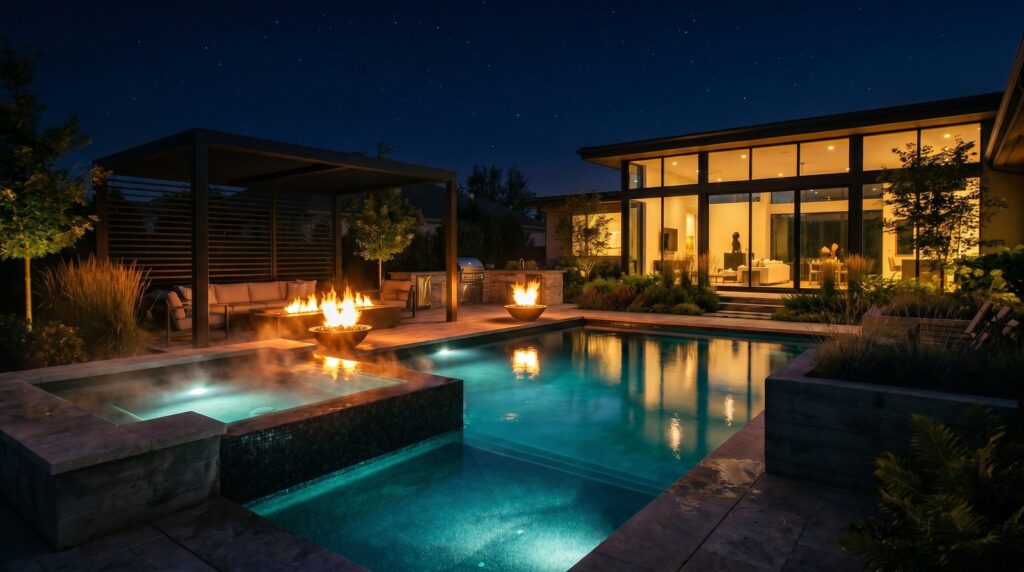
Dusk renders consistently outperform day renders in buyer engagement and investor response for residential and mixed-use projects. The warm, directional light of a dusk scene creates depth, highlights materiality, and triggers an emotional reaction that flat midday light rarely achieves. That said, day renders are not obsolete — they serve a distinct informational role, and the strongest marketing packages include both. The choice depends on project type, audience, and the specific decision you are trying to drive.
What Does a Day Render Actually Communicate to Buyers?
A day render’s primary job is clarity. Full, even daylight reads every material, every window line, every landscape element without ambiguity. For a buyer comparing floor plans or a planning board reviewing massing, that legibility is the point.
In our exterior work, day lighting is the workhorse for permit submissions, architect-client reviews, and construction documentation packages. When a developer needs to show exactly how a facade system tiles across a 200-unit multifamily building, or how a retail podium sits relative to the street, a neutral overcast or bright midday sky removes shadow drama and lets the architecture speak structurally.
Day renders also perform well in printed brochures where color accuracy matters — a PBR material library reads most faithfully under a neutral sun angle. For landscape-heavy projects, full daylight shows planting canopy, pool water clarity, and hardscape patterning at their most readable.
Where day renders fall short: they rarely produce the aspirational, lifestyle-forward feeling that converts a passive browser into an active inquiry. The light is informative, not seductive.
Why Do Dusk Renders Consistently Outperform in Marketing?
Dusk renders drive stronger emotional response because the lighting conditions are inherently cinematic — warm golden or amber sun near the horizon, interior lights beginning to glow, sky gradients that no midday scene can replicate.
From our production experience across exterior and landscape projects, dusk is the single most requested lighting condition for hero renders — the primary image that leads a listing, an investor deck, or a social ad. The reasons are technical as much as aesthetic:
- Directional warmth: Low-angle sunlight rakes across facades, revealing texture and depth in ways that overhead midday light flattens.
- Interior-exterior dialogue: Lit interiors visible through glazing add human scale and a sense of occupancy — buyers instinctively imagine themselves inside.
- Sky drama: A gradient dusk sky gives the composition a natural focal hierarchy that draws the eye to the building.
- Perceived premium: The lighting condition is associated with high-end architectural photography, so it signals quality before a buyer reads a single spec.
- Social media performance: Warm-toned, high-contrast images consistently outperform cooler, flatter images on Instagram and LinkedIn in the real-estate development space.
For exterior rendering projects targeting pre-sales or lease-up campaigns, dusk is almost always the right call for the lead image.
When Should You Commission Both Lighting Variants?
Commission both when you need to serve two different audiences or two different stages of the sales process — and most serious marketing campaigns do.
A typical developer package pairs a dusk hero with a day secondary: the dusk image leads the listing, the social post, and the investor slide; the day image supports the brochure interior, the website gallery, and the planning submission. Together they cover every channel without forcing one image to do everything.
Specific triggers for a dual-lighting package:
- Pre-sales campaigns where you need both an emotional hook and a technical reference
- Investor decks that open with a dusk hero and then show day views for site context
- Projects with strong landscape or pool features — a dusk pool render alongside a day site plan view covers both lifestyle and layout
- Multifamily lease-up packages where property management teams need imagery for multiple seasons and dayparts
- Luxury residential where the client expects a full photographic-style editorial set
The incremental cost of a second lighting pass on an already-modeled scene is significantly lower than commissioning a separate render from scratch — the geometry, materials, and camera angle are already done. See our rendering cost guide for a breakdown of what drives pricing when adding lighting variants.
How Does Lighting Choice Affect Perceived Value and Price Point?
Lighting is one of the most powerful signals of project tier. Buyers and investors calibrate perceived quality within seconds of seeing an image, and lighting condition is a primary driver of that calibration.
Dusk renders, when executed with accurate global illumination and physically-based materials, read as premium because they mirror the lighting style of high-end architectural photography in publications like Architectural Digest or Dezeen. A well-crafted dusk exterior suggests the developer paid attention to every detail — which is exactly the inference you want a buyer or capital partner to make.
Day renders, conversely, read as functional. That is not a weakness for the right context, but in a competitive listing environment where a buyer is scrolling through dozens of projects, a flat day render of a luxury condo will not stop the scroll the way a cinematic dusk image will.
The practical implication: if your project is positioned above the median price point for its market, lead with dusk. If the project is workforce housing or a commercial asset where buyers are evaluating specs and location over lifestyle, day renders may be entirely sufficient. Understanding exterior rendering specifications — including how camera angle compounds the effect of lighting — helps you brief your studio for maximum impact.
What About Night Renders — Are They Worth the Extra Cost?
Night renders are a specialized tool, not a default. They perform best for projects where after-dark presence is a genuine selling point: high-rise condos with illuminated facades, hospitality assets, retail streetscapes, or mixed-use developments where activated ground-floor lighting defines the brand.
A full night render requires more art direction than dusk — every light source must be intentional, the scene has no ambient fill from the sky, and poorly executed night renders look muddy or artificial. The production complexity is real.
When night renders earn their place:
- Hospitality and hotel projects where evening ambiance is central to the brand
- Urban mixed-use with activated retail, signage, or rooftop amenities
- High-rise residential where the illuminated tower silhouette is a landmark statement
- Projects in markets where the after-dark lifestyle is a primary draw (waterfront, entertainment districts)
For most suburban residential and standard commercial projects, dusk covers the emotional territory of night without the additional production cost or the risk of a render that looks underlit.
Which Lighting Works Best by Project Type?
The right lighting condition is not universal — it maps to project type, buyer psychology, and marketing channel. Use this as a starting reference:
| Project Type | Recommended Lead Lighting | Secondary / Support | Notes |
|---|---|---|---|
| Luxury single-family / custom home | Dusk | Day (landscape detail) | Dusk hero is near-universal for high-end residential marketing |
| Multifamily / apartment | Dusk | Day (facade + site context) | Dusk for lease-up ads; day for planning and investor decks |
| Condo / for-sale residential | Dusk | Day + night (amenity deck) | Pre-sales campaigns benefit from a full day/dusk/night set |
| Commercial / office | Day | Dusk (if landmark position) | Tenants and brokers prioritize clarity; dusk only if image is a brand statement |
| Retail / mixed-use | Dusk or Night | Day (streetscape context) | Activated ground floor reads best in lower-light conditions |
| Hospitality / hotel | Dusk or Night | Day (pool, exterior grounds) | Evening ambiance is core to the hospitality brand proposition |
| Landscape / pool | Dusk | Day (planting and layout) | Pool water and landscape lighting read dramatically at dusk |
How to Brief Your Studio on Lighting Direction
A clear lighting brief saves revision cycles and ensures the render serves your actual marketing goal, not just a generic “nice exterior shot.” Here is what to specify when you engage a studio:
- State the primary use case first. “This is the hero image for our pre-sales landing page” tells the studio to optimize for emotional impact. “This is for the planning submission” tells them to optimize for clarity.
- Specify the time of day and season. “Late afternoon, golden hour, late summer” gives more useful direction than “dusk.” Sun angle varies significantly by latitude and season — in Tampa, a December dusk hits differently than a June one.
- Indicate sky condition. Clear sky, partly cloudy, or overcast each produce different global illumination. Partly cloudy at dusk can add drama without losing warmth.
- Flag interior lighting intent. If you want lit interiors visible through glazing, confirm that with your studio early — it requires interior scene setup even for an exterior render.
- Reference images. Pull three to five reference images that capture the mood you want. This is the fastest way to align on lighting intent without lengthy written descriptions.
- Confirm camera angle relative to sun. A facade facing west will be front-lit at dusk; a facade facing east will be in shadow. Camera placement and sun direction must be coordinated. Our guide on choosing render lighting covers this geometry in detail.
Getting the brief right at the start is the difference between a render that stops the scroll and one that requires multiple revision rounds. For a full breakdown of what to prepare before engaging a studio, see our exterior rendering specifications guide.
Frequently Asked Questions
Is a dusk render always better than a day render for real-estate marketing?
Dusk is better for hero images, emotional engagement, and pre-sales campaigns. Day renders are better for planning submissions, technical reviews, and brochure interiors where material accuracy matters more than atmosphere. Most strong marketing packages use both rather than choosing one exclusively.
Does adding a dusk lighting variant significantly increase the cost of a render?
Adding a second lighting pass to an already-modeled scene costs considerably less than a new render from scratch because the geometry, materials, and camera setup are reused. The incremental effort is primarily in lighting adjustments and sky replacement. Visit our rendering cost page for qualitative guidance on what drives pricing.
How do I know which camera angle works best with dusk lighting?
The key is coordinating sun direction with facade orientation. A west-facing facade catches direct dusk light; an east-facing facade will be in shadow. Your studio should map the building’s orientation against the intended sun angle before committing to a camera position. Sharing a site plan and compass orientation at briefing stage resolves this immediately.
Can dusk renders work for commercial office buildings?
Yes, especially when the building has a landmark position, distinctive facade lighting, or a ground-floor retail component. For standard suburban office buildings where tenants and brokers prioritize legibility over atmosphere, day renders are typically the primary deliverable, with dusk reserved for the portfolio hero or developer brand materials.
What makes a dusk render look fake or unconvincing?
The most common failure points are mismatched light temperature (interior and exterior lights at the same color temperature), sky gradients that don’t match the sun angle, and materials that don’t respond correctly to low-angle light. Physically-based rendering with accurate global illumination and a properly calibrated HDR sky environment resolves most of these issues. See our notes on materials and photorealism for more detail.
Last updated: September 2026