Do Architects Do Renderings? In-House vs. Visualization Studio Explained
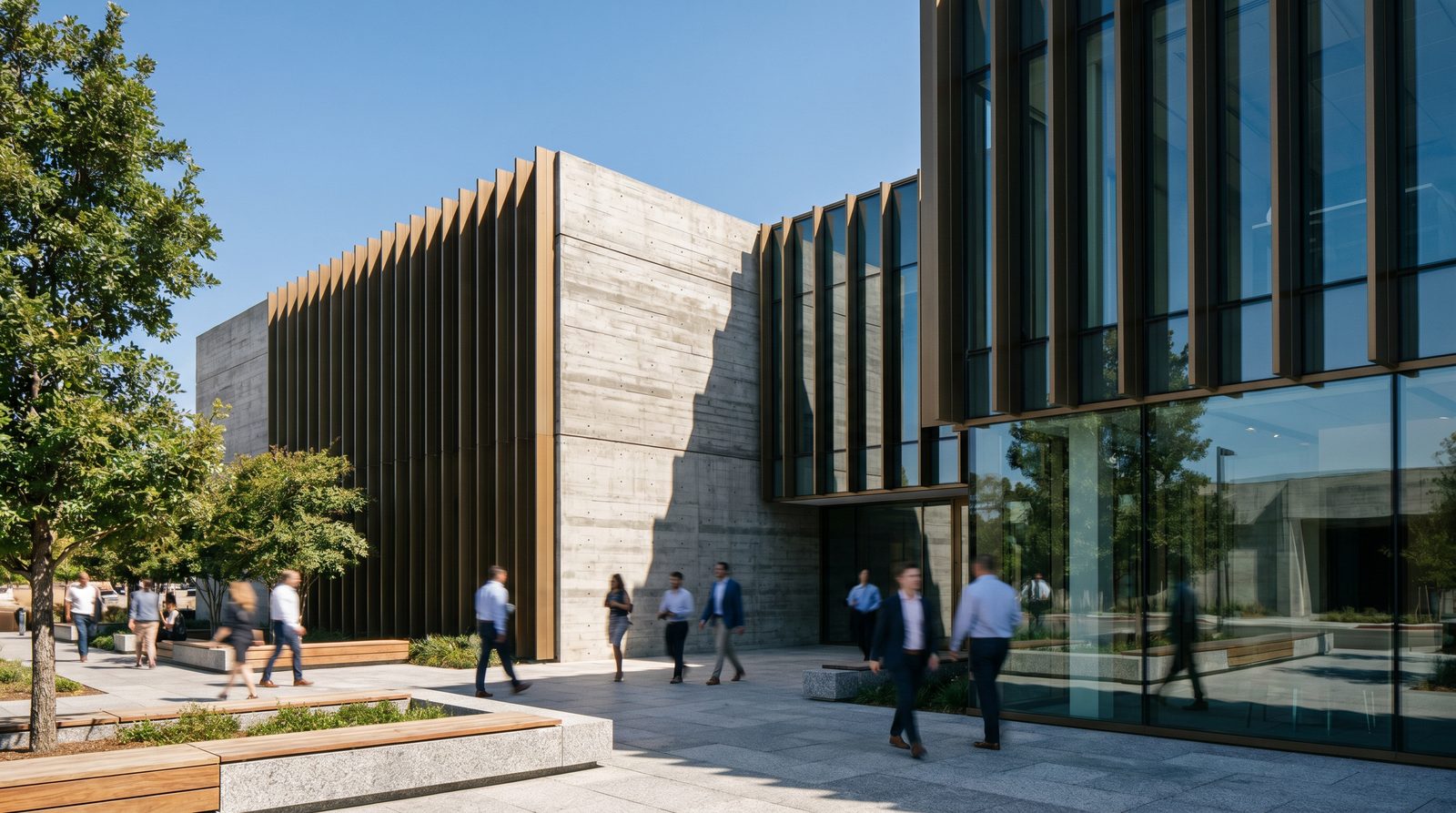
Yes, most US architecture firms produce renderings in-house using real-time tools like Enscape, Lumion, or Twinmotion — but the quality ceiling of those tools is lower than what a dedicated visualization studio delivers. In-house renders are fast and good enough for design reviews and early client conversations. For marketing hero shots, pre-sales campaigns, or investor decks, a specialist studio is the more reliable choice.
Ratio Visuals' take: In our experience working with architects and developers across the US, the most common mistake is using in-house renders for marketing materials they were never designed to carry. A Lumion still made for a design review meeting looks noticeably different from a photorealistic marketing render — and buyers notice, even if they can't articulate why. The render's job changes depending on who the audience is.
What tools do architects use to make renderings in-house?
US architecture firms most commonly use Enscape, Lumion, and Twinmotion for in-house rendering. These are real-time renderers that connect directly to modeling software — Revit, SketchUp, Rhino, or Archicad — so the image updates as the design changes. According to industry tool reviews, each tool fits a slightly different workflow stage.
- Enscape — best for live design reviews inside Revit or SketchUp. The viewport updates in real time, so architects can walk clients through a model mid-meeting without exporting anything.
- Lumion — favored for polished presentation stills and animations, with stronger atmosphere controls, landscaping libraries, and material assets than Enscape.
- Twinmotion — free for firms under $1M in annual revenue (as of the research date), making it a practical entry point for smaller practices that need real-time rendering and basic animation without a large software budget.
Offline renderers like V-Ray or Corona are also used, but they compute images separately from the modeling environment and take significantly longer per frame — better suited to studios with dedicated render time than to busy design teams.
How does in-house rendering compare to a visualization studio?
In-house rendering and a specialist visualization studio serve different purposes. In-house tools prioritize speed and iteration; a visualization studio prioritizes photorealism, lighting craft, and marketing-ready output. The right choice depends on who will see the image and what decision it needs to support.
| Factor | Architect in-house (Enscape / Lumion / Twinmotion) | Visualization studio (Ratio Visuals) |
|---|---|---|
| Best for | Design reviews, internal coordination, early client walkthroughs | Marketing hero shots, pre-sales, investor decks, lease-up campaigns |
| Output quality ceiling | Good — real-time quality, limited by asset libraries and lighting controls | Photorealistic — offline rendering, custom lighting, PBR materials, post-production |
| Speed / iteration | Very fast — live viewport, no export needed | Slower per revision — each image is a production job; shot list agreed upfront |
| What you need to provide | The live model (already in the architect's hands) | CAD/BIM files, drawings, material specs, site context, shot list |
| Lighting craft | Preset-driven; global illumination is automated | Manually art-directed — dusk, golden hour, overcast, night scenes composed per shot |
| Animation capability | Basic walkthroughs and fly-throughs | Cinematic sequences, drone paths, interior reveals, marketing films |
| Staffing requirement | Any team member with the software license | None — studio handles all production |
| Pricing model | Software subscription cost only | Per-project quote based on view count, complexity, and deliverable type |
When is in-house rendering the right call?
In-house rendering is the right choice when speed and iteration matter more than photorealism. For design development, internal coordination, planning-board submissions, and early client conversations, real-time tools like Enscape or Twinmotion are faster and more flexible than any external workflow. The architect controls the model and can update the view in seconds.
Specifically, in-house rendering works well when:
- The audience is internal — the design team, the client's project manager, or a planning committee reviewing massing and layout.
- The design is still changing and the render needs to track those changes in near real time.
- The firm has a dedicated visualization technician or a team member who has invested time in the rendering tool.
- The deliverable is a walkthrough for a design review meeting, not a marketing asset.
When should an architect or developer outsource to a visualization studio?
Outsourcing to a visualization studio makes sense when the render's job is to sell, not just to show. Marketing hero shots, pre-sales brochures, real-estate listing images, and investor presentations require a level of photorealism — in lighting, materials, landscaping, and post-production — that real-time tools were not designed to produce at scale. A specialist studio also removes the production burden from the design team entirely.
According to industry workflow guides, outsourcing becomes the practical choice when a project needs hero shots, complex cinematic animations, or a level of photorealism that is faster to obtain from a specialist than from an in-house design team. That matches what we see in our own project intake: the firms that come to us have usually already used Lumion or Enscape internally and know exactly where those tools stop.
Outsourcing is the stronger option when:
- The render will appear in a sales brochure, listing portal, billboard, or investor deck — anywhere a buyer or investor will judge the project on the image alone.
- The project needs photorealistic exterior renders with art-directed lighting (dusk, golden hour, overcast) that real-time presets can't replicate convincingly.
- The scope includes detailed interior renders with custom finishes, furniture, and material accuracy that match the specification package.
- The firm needs landscape and pool renders showing outdoor living areas, planting, and hardscape at a level of detail that real-time asset libraries don't support.
- The design team is at capacity and cannot absorb a visualization production run without delaying design work.
- The project is a high-value residential, multifamily, commercial, or hospitality development where the marketing budget justifies premium visuals.
What drives the cost difference between in-house and outsourced rendering?
The cost of in-house rendering is primarily a software subscription — Enscape, Lumion, and Twinmotion all charge annual or monthly fees, and the labor cost is absorbed into the design team's existing hours. Outsourced rendering is priced per project, with the main cost drivers being the number of views, the complexity of the building and site, the lighting scenarios required, and whether animation is included.
For a detailed breakdown of what affects the cost of professional rendering, see our rendering cost guide. Every Ratio Visuals project is quoted individually — send us your drawings and we'll return a shot list, timeline, and proposal within one business day.
Can architects produce photorealistic renders without a studio?
Architects can produce high-quality renders in-house, but "photorealistic" in the marketing sense — the kind of image where a buyer cannot tell whether the building exists yet — typically requires offline rendering, manual lighting setup, and post-production compositing that goes beyond what real-time tools automate. Some firms invest in V-Ray or Corona and hire dedicated visualization staff to close that gap, but that is a significant resource commitment.
The honest answer is that the gap between a well-set-up Lumion render and a studio-produced photorealistic image is visible to most buyers, even if they can't name the reason. For projects where that gap matters commercially, outsourcing is the more cost-effective path than building an in-house capability from scratch.
Frequently asked questions
Do architects include renderings in their services?
Most US architecture firms include basic renderings as part of their design services, typically produced with real-time tools like Enscape, Lumion, or Twinmotion. These are suitable for design reviews and client presentations. Photorealistic marketing renders are usually either priced as an add-on or outsourced to a specialist visualization studio.
What is the difference between an architect's render and a visualization studio render?
An architect's in-house render prioritizes speed and design iteration — it updates as the model changes and is designed for internal review. A visualization studio render is a finished production asset: art-directed lighting, custom PBR materials, post-production compositing, and a quality level intended for marketing, sales, and investor presentations.
Is it worth paying for a professional rendering studio instead of using Lumion or Enscape?
It depends on the audience and the asset's commercial purpose. For design reviews and planning submissions, Lumion and Enscape are fast and sufficient. For marketing materials — listings, brochures, investor decks, pre-sales campaigns — a professional studio produces images that perform better commercially and removes the production burden from the design team.
How do I know when my project needs a visualization studio?
The clearest signal is when the render's primary audience is a buyer, investor, or lender rather than the design team or a planning board. If the image will appear in a sales brochure, listing portal, or pitch deck, the quality bar is higher than real-time tools reliably reach without significant in-house investment in dedicated visualization staff.
What should I send a visualization studio to get a render started?
A visualization studio typically needs CAD or BIM files (Revit, SketchUp, or DWG), floor plans and elevations, a material and finish specification, site context information, and a shot list indicating the views and lighting scenarios required. At Ratio Visuals, we help clients build that shot list as part of the quoting process.
Last updated: November 2026