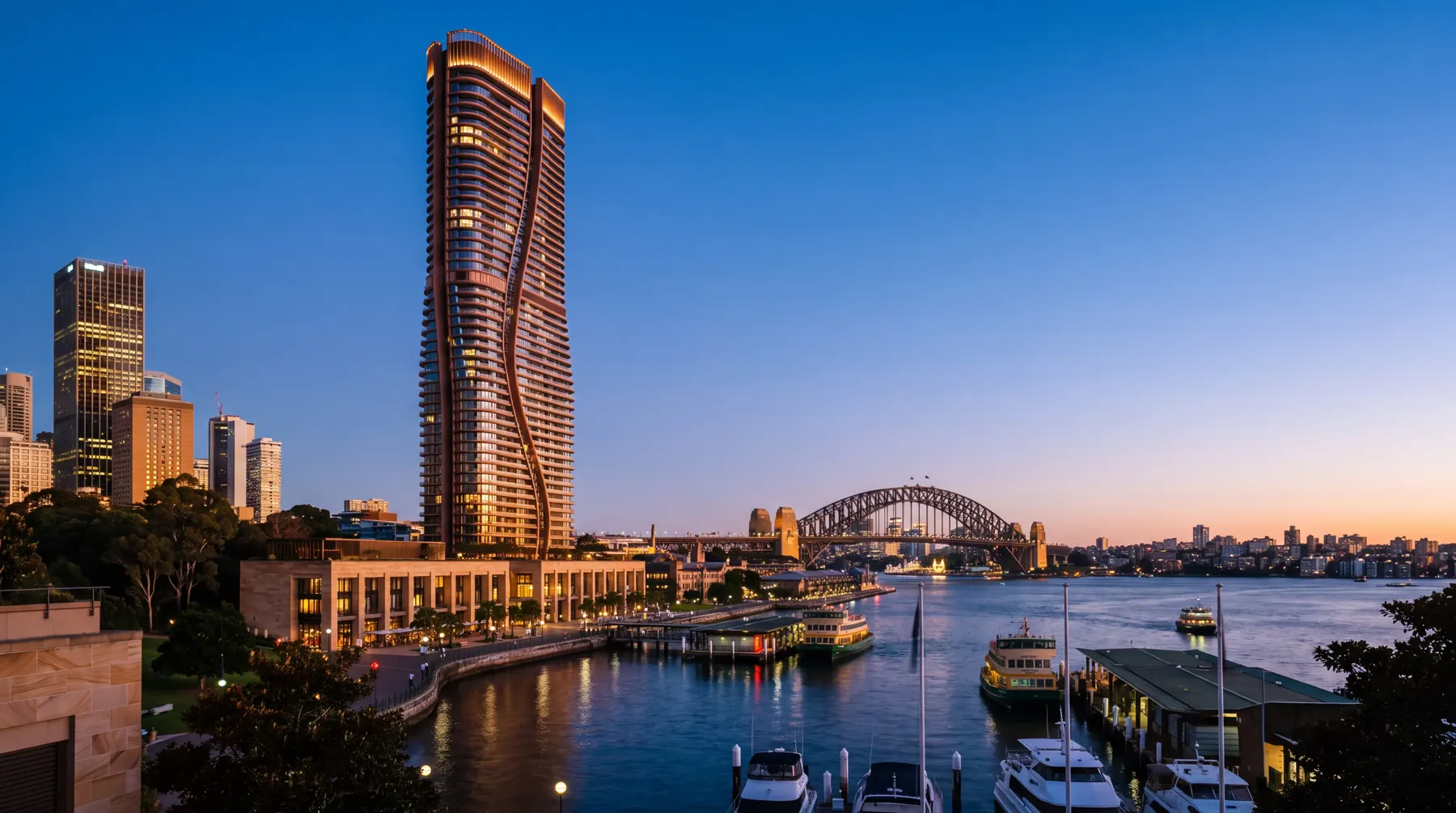
A photorealistic render comes from accurate lighting, real materials, layered depth and lived-in styling — not just a powerful computer. The tells of a great render are believable light and shadow, true material response (glass, water, metal, fabric), foreground-to-background depth, and human styling details that make a space feel real.

The single biggest factor is light. Real, directional light with accurate shadows, soft contact points and atmosphere is what separates a photo from an obvious render. Flat, even lighting is the instant AI/CGI tell.
Photorealism lives in how materials respond — reflective low-iron glass, rippling water, brushed metal, woven fabric — and in layered foreground, midground and background depth that gives the image a real lens feel.
Empty, perfect rooms read fake. A folded throw, a bowl of fruit, an open book, slightly imperfect staging — these stylist's details are what make the eye accept a space as real.
Accurate directional light and shadow, true material response, layered depth, and lived-in styling — far more than raw computing power.
Usually flat lighting, perfect-but-empty rooms, or generic materials. The fix is art direction, not a faster machine.
We name one dominant light source, real designer materials, a film grade and lens, and stylist details on every shot. See our case studies.
Send us your project and get a fixed quote — usually within one business day.
Start a project →