Architectural Animation Cost: 2026 Price Guide
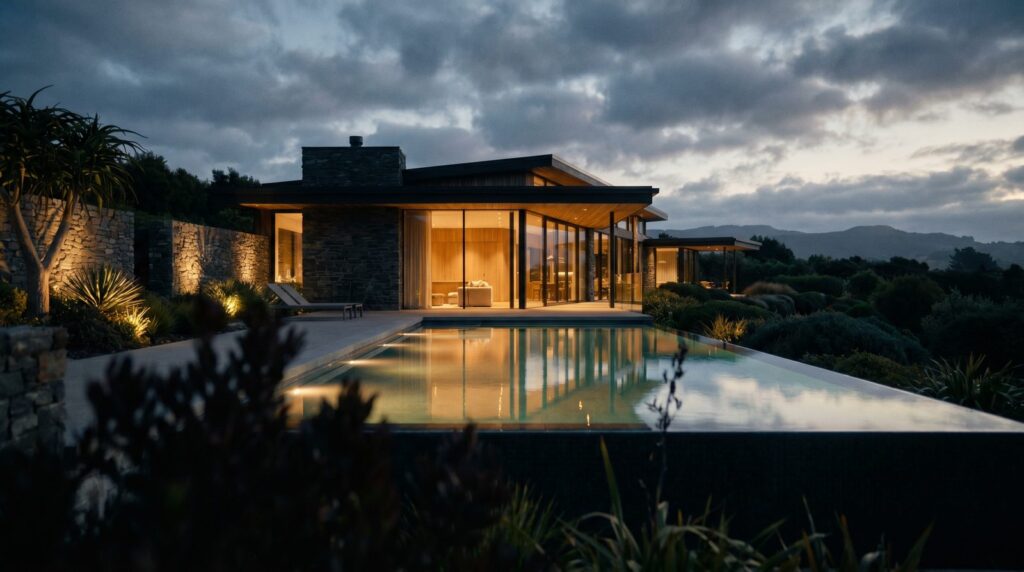
Architectural animation cost depends on project complexity, animation length, level of detail, and the number of revision rounds — not a flat per-minute rate. A short flyover of a single-family home sits at a very different investment level than a cinematic walkthrough of a mixed-use tower with interior sequences, landscaping, and motion graphics. Understanding what drives the price lets you budget accurately and scope your deliverable before you request a quote.
What Does an Architectural Animation Actually Cost?
There is no universal per-second rate for architectural animation because the work is not priced like stock footage — it is priced like custom production. Every project requires a unique 3D scene built from your drawings, custom materials, lighting rigs, camera paths, and rendering time that scales with resolution and frame count.
Rather than a single number, animation is typically scoped in tiers that reflect deliverable length and scene complexity:
- Short flyover or aerial pass (15–30 seconds): Exterior-only, limited camera moves, simple entourage. Common for single-family homes, small multifamily, or concept approvals.
- Mid-length exterior walkthrough (30–60 seconds): Multiple camera angles, curated landscaping, day or dusk lighting. Suitable for boutique multifamily, commercial, or hospitality projects going into pre-sales.
- Full cinematic walkthrough (60–120+ seconds): Exterior and interior sequences, branded motion graphics, music, and voice-over sync. Standard for luxury residential, large multifamily, and mixed-use developments targeting investor decks and sales centres.
For a detailed look at how animation pricing compares to still renders across project types, see our 3D rendering cost guide.
What Factors Drive the Price Up (or Down)?
Six variables account for most of the cost difference between a modest flyover and a full cinematic production. Understanding each one lets you make deliberate trade-offs rather than cutting scope blindly.
1. Animation Length
Every additional second means more frames to render. A 30-second animation at 24 fps is 720 frames; a 90-second animation is 2,160 frames. Render time compounds with scene complexity, so length is the single largest lever on cost.
2. Scene Complexity
A detached villa with clean geometry renders far faster than a mixed-use tower with curtain-wall glazing, populated retail at grade, and a structured parking podium. Complex geometry, dense entourage (people, vehicles, trees), and water features all extend build and render time.
3. Interior vs. Exterior Sequences
Interior animation requires fully dressed rooms — furniture, lighting fixtures, materials, soft furnishings — and physically accurate interior lighting, which is computationally heavier than exterior daylight. Each interior room added to a walkthrough adds meaningful production time.
4. Lighting Scenario
Dusk and night sequences require more nuanced lighting setups than a clean midday exterior. In our exterior and animation work, dusk lighting consistently adds production time because every artificial light source — facade uplighting, pool illumination, interior spill — must be individually calibrated for photorealism.
5. Output Resolution and Frame Rate
4K delivery at 30 fps requires roughly four times the render compute of 1080p at the same frame rate. For most marketing uses, 1080p at 24–30 fps is the practical standard; 4K is worth the cost only for large-screen installations or broadcast placements.
6. Revision Rounds and Source Material Quality
Projects with complete, clean CAD or BIM files, a confirmed material schedule, and a clear camera brief move faster and cost less to revise. Projects that begin with schematic drawings and evolve through design changes mid-production require re-modelling, which adds cost regardless of the studio.
Still Renders vs. Animation: Which Delivers Better ROI?
Still renders and animation serve different conversion moments — they are not interchangeable, and the better ROI depends on where in your sales funnel the asset lives.
| Criteria | Still Renders | Architectural Animation |
|---|---|---|
| Best use case | Listings, print brochures, planning submissions, social ads | Sales centre screens, investor decks, social video, pre-sales launches |
| Production time | Shorter (days to one week per image) | Longer (two to six weeks depending on complexity) |
| Relative cost | Lower per deliverable | Higher total investment |
| Audience engagement | High for static channels | Significantly higher for video-first channels |
| Reusability | High — individual frames repurpose easily | Very high — stills can be extracted from animation frames |
| Conveys spatial flow | Limited — single viewpoints only | Strong — communicates scale, sequence, and experience |
| Ideal project stage | Planning, early marketing, ongoing listings | Pre-sales launch, investor presentations, major campaigns |
For a deeper breakdown of when each format wins, read our guide on architectural animation vs. still renders.
What’s Included in a Typical Animation Package?
A professional animation deliverable from a studio like Ratio Visuals is not just a video file. Understanding what is (and is not) included prevents scope mismatches.
- 3D scene build: Modelling from your supplied drawings (CAD, Revit, SketchUp, or PDF plans). The scene is purpose-built — not repurposed from a library asset.
- Material and texture application: PBR (physically based rendering) materials matched to your specified finishes — cladding, glazing, roofing, paving, and landscaping.
- Camera path and storyboard: A pre-approved shot list or animatic so you confirm the sequence before full rendering begins.
- Lighting and environment: Sky, sun angle, artificial lighting (if dusk/night), and ambient occlusion tuned for photorealism.
- Entourage: People, vehicles, and planting appropriate to the project type and market.
- Post-production: Colour grading, atmospheric effects, and compositing.
- Audio (if included): Licensed background music and, if scoped, voice-over sync.
- Final delivery formats: Typically MP4 (H.264 or H.265) at agreed resolution; ProRes or DPX on request for broadcast.
- Revision rounds: Usually one or two structured rounds; additional rounds are scoped separately.
How Long Does a Walkthrough Animation Take to Produce?
Production timelines for architectural animation are longer than for still renders because every frame must be rendered, not just a handful of camera positions. Realistic timelines by project type:
- Simple flyover (15–30 sec, exterior only): Two to three weeks from approved drawings to final delivery.
- Mid-length exterior walkthrough (30–60 sec): Three to four weeks.
- Full cinematic with interior sequences (60–120 sec): Four to eight weeks, depending on complexity and revision cycles.
The biggest timeline risk is late or incomplete source material. Projects stall when material schedules are unconfirmed, drawings change mid-production, or camera brief approvals are delayed. Providing complete, finalised drawings at kick-off is the single most effective way to protect your delivery date.
When Is Animation Worth the Extra Budget?
Animation earns its cost when spatial experience is the selling point — when a still image cannot communicate what the buyer or investor needs to feel confident. Specific scenarios where animation consistently justifies the investment:
- Pre-sales launches for multifamily or condo projects where buyers are committing to units that do not yet exist. A walkthrough closes the imagination gap.
- Investor and lender presentations for developments requiring equity raises or construction financing. A polished animation signals project seriousness and reduces perceived risk.
- Sales centre and showroom installations where the animation runs on a large screen as the centrepiece of the buyer experience.
- Social media campaigns targeting platforms (Instagram Reels, YouTube, LinkedIn) where video content achieves significantly higher organic reach than static images.
- Complex or phased masterplans where multiple buildings, phases, or amenity sequences need to be communicated in a single narrative arc.
If your project is a single custom home going to a committed client, a set of high-quality still renders from our architectural animation service may deliver stronger ROI per dollar. If you are launching a 200-unit mixed-use development to the public, animation is not a luxury — it is a marketing infrastructure decision.
How to Get an Accurate Quote for Your Project
Animation quotes require more information than still-render quotes because the scope variables are wider. To receive an accurate, apples-to-apples proposal, prepare the following before reaching out:
- Project drawings: CAD, Revit, SketchUp, or PDF plans and elevations at the most current design stage.
- Desired animation length: Even an approximate target (30 seconds, 60 seconds, 90 seconds) dramatically narrows the estimate.
- Sequence brief: Exterior only, or does it include interior rooms? Which rooms? How many distinct camera moves?
- Lighting scenario: Day, dusk, night, or a mix?
- Delivery date: Hard deadline (sales launch, investor meeting) or flexible?
- Output format and resolution: Web/social (1080p) or large-format screen (4K)?
- Audio requirements: Music only, or voice-over?
With this information, a professional studio can return a scoped proposal rather than a wide ballpark. For a broader look at how rendering and animation are priced across project types, visit our architectural rendering pricing guide or go directly to our 3D rendering cost page.
Frequently Asked Questions
Is architectural animation priced per second?
Some studios quote per second, but it is a misleading metric because complexity matters far more than duration. A 20-second interior sequence with custom lighting and fully dressed rooms costs more to produce than a 45-second exterior flyover of a simple building. Reputable studios price by scope, not by the clock.
Can I extract still renders from an animation?
Yes — high-quality stills can be pulled from rendered animation frames, which makes animation a strong dual-purpose investment. However, if specific hero angles are critical for print or large-format use, those shots are typically rendered at higher resolution separately to ensure sharpness at print scale.
How many revision rounds are standard?
Most professional studios include one or two structured revision rounds in a standard animation package. Revisions after the camera path and storyboard are approved tend to be minor; changes that require re-modelling or re-routing the camera path after rendering has begun are scoped as additional work.
What file do I receive at the end?
Standard delivery is an MP4 file (H.264 or H.265 codec) at the agreed resolution — 1080p for most web and social uses, 4K for large-screen or broadcast applications. Studios can also deliver ProRes or image-sequence formats for post-production workflows if required.
How does animation compare in cost to a full set of still renders?
A full cinematic animation typically represents a meaningfully larger investment than a comparable set of still renders, reflecting the additional modelling, camera animation, and per-frame rendering involved. For projects where video is a core marketing channel, the cost-per-impression over the campaign lifetime often makes animation the more efficient spend.
Ready to scope your project? Contact Ratio Visuals with your drawings and brief — we’ll return a detailed proposal, not a guess.
Last updated: August 2026