Photorealistic vs Stylized Architectural Renderings: Which Sells Better?
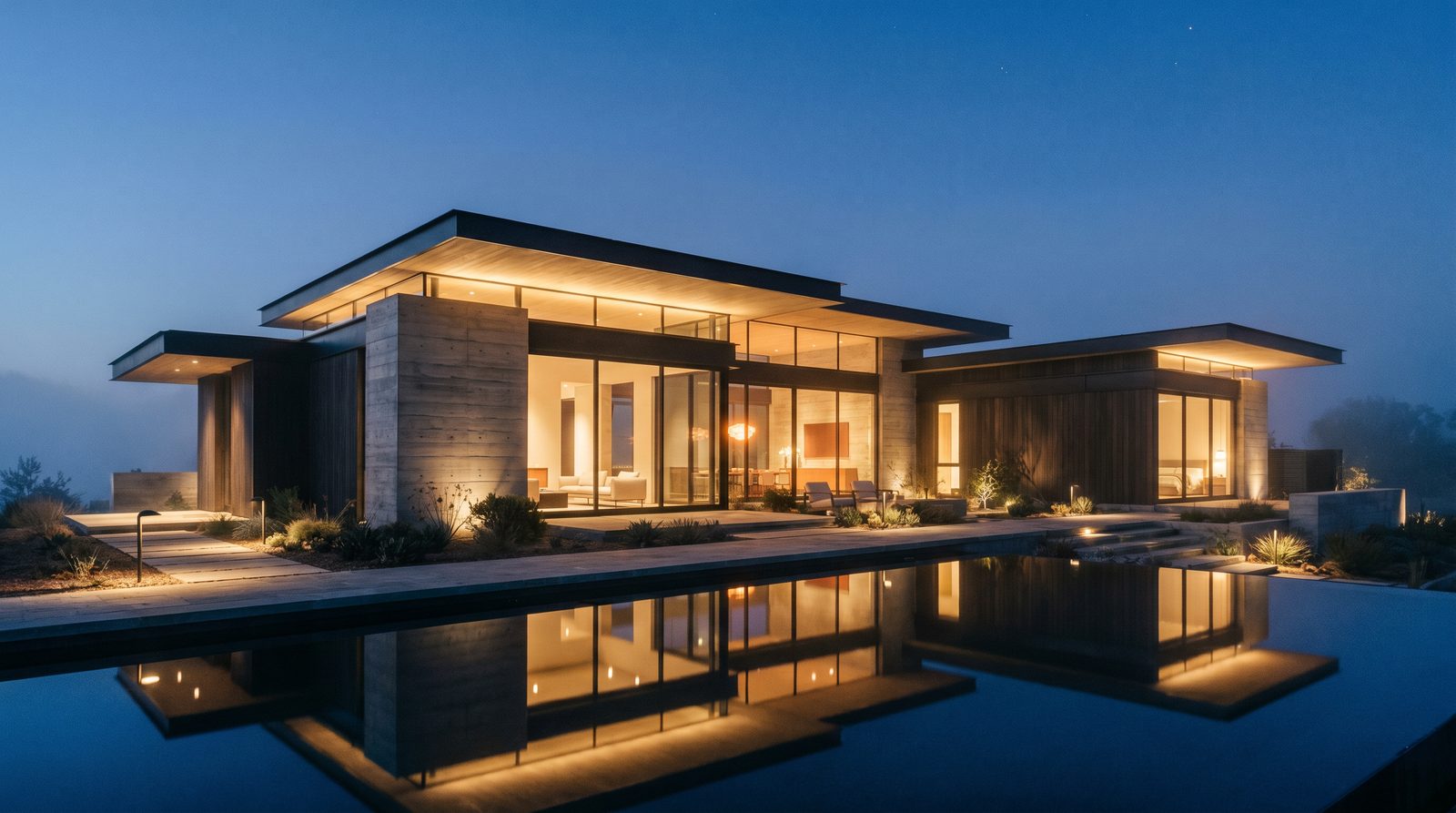
For most real-estate sales and pre-sales, photorealistic rendering outperforms stylized work. Photorealism reduces buyer uncertainty by communicating layout, scale, light, and finishes with the clarity of a photograph — which is why it consistently drives faster decisions and more qualified inquiries. Stylized rendering earns its place in design competitions, concept approvals, and brand-forward marketing where mood and narrative matter more than material accuracy.
Ratio Visuals' take: The most common mistake we see developers make is choosing a stylized look because it feels "safer" early in the process — it hides unresolved details. That logic backfires at the sales stage. Buyers who cannot picture the finished product do not commit. If your drawings are far enough along to build from, they are far enough along to render photoreal. The time to go stylized is when the design itself is the message — competitions, planning boards, concept decks — not when you need a deposit.
What is the difference between photorealistic and stylized architectural rendering?
Photorealistic rendering simulates real-world light, materials, and camera optics to produce an image indistinguishable from a photograph of a finished building. Stylized rendering deliberately departs from that simulation — using watercolor washes, sketch lines, muted palettes, or graphic abstraction — to communicate concept and atmosphere rather than construction-ready detail.
The two approaches use the same underlying 3D geometry but diverge at the shading and post-production stage. A photorealistic exterior render uses physically based rendering (PBR) materials, global illumination, and high-resolution texture maps. A stylized version of the same model might suppress shadow detail, flatten materials, and apply an illustrative overlay. Neither is technically harder; they serve different audiences and different stages of the design process.
Which rendering style performs better for real-estate sales?
Photorealistic rendering consistently outperforms stylized work for real-estate sales. Industry evidence shows that immersive, high-fidelity visuals attract significantly more qualified buyer inquiries and support faster purchase decisions than abstract or illustrative imagery — because buyers need to see finishes, light, and scale before they commit.
The evidence base is substantial, though most of it comes from industry studies rather than peer-reviewed academic research:
- A Matterport-commissioned analysis of MLS data across four U.S. markets found listings with photorealistic 3D tours closed at 4–9% higher prices and up to 31% faster in one market, compared to listings without them.
- A VHT Studios analysis of more than 200,000 listings found properties marketed with professional photographs sold for 32% more than those with amateur images — underscoring how much visual quality moves the needle.
- A 2025 CBRE survey reported that listings with immersive 3D views attracted 67% more qualified inquiries than listings relying on photographs alone.
- A LendingTree survey of more than 1,000 homeowners found that 47% of recent buyers made an offer before seeing the home in person — which means the render is often the deciding visual, not the site visit.
Stylized renders do not appear in these datasets because they are rarely used for active sales listings. Their audience — architects, planning boards, design juries — evaluates them on different criteria than a buyer deciding whether to wire a deposit.
For a deeper look at how developers deploy these visuals in pre-sales campaigns, see our guide to real-estate rendering for developers.
Photorealistic vs stylized rendering: side-by-side comparison
| Criterion | Photorealistic Rendering | Stylized Rendering |
|---|---|---|
| Primary goal | Communicate finished appearance with photograph-level accuracy | Communicate concept, mood, or design intent |
| Best for | Pre-sales, listings, investor decks, lease-up marketing, buyer-facing collateral | Design competitions, planning approvals, concept presentations, brand campaigns |
| Audience | Buyers, tenants, lenders, investors | Design juries, planning boards, architects, brand-led developers |
| Material & finish accuracy | High — PBR materials, accurate reflections, real-world lighting | Low to medium — materials are implied, not simulated |
| Design resolution required | High — materials, fixtures, and landscaping must be specified | Low to medium — concept geometry is sufficient |
| Effect on buyer confidence | Strong — reduces uncertainty about what they are buying | Weak — abstract imagery increases uncertainty for non-designers |
| Effect on design narrative | Moderate — realism can flatten the emotional story | Strong — abstraction lets the concept breathe |
| Typical deliverable | Still renders, dusk/twilight shots, aerial views, walkthroughs | Concept illustrations, watercolor perspectives, diagrammatic views |
When does stylized rendering outperform photorealism?
Stylized rendering outperforms photorealism when the audience is evaluating design thinking rather than purchase readiness. Design competition juries, planning and zoning boards, and concept-stage client presentations all respond better to illustrative work that communicates intent without over-committing to unresolved details.
Three scenarios where stylized is the right call:
- Design competitions and awards submissions. Juries read hundreds of entries. A strong graphic language — bold palette, selective detail, atmospheric perspective — communicates authorship and concept faster than a photorealistic scene that looks like every other building.
- Early planning and community engagement. When a scheme is still evolving, a photorealistic render of unresolved massing can create false expectations. A clearly illustrative image signals "this is a direction, not a promise."
- Brand-led luxury marketing. Some ultra-premium developers use painterly or cinematic stylization to position a project as aspirational rather than transactional. This works when the brand story is the differentiator — but it is a narrow use case, not a default.
What drives the cost difference between the two styles?
The cost of a photorealistic render is driven by the number of views, the complexity of the building's geometry and materials, the lighting scenario (a dusk or twilight shot takes longer to light and composite than a midday exterior), and the level of landscaping and entourage detail required. Stylized renders can be faster to produce when the design is at concept stage, but a fully detailed stylized illustration with hand-crafted post-production can take just as long as a photorealistic one.
For a full breakdown of what drives rendering costs, see our rendering cost guide. Both styles are quoted individually at Ratio Visuals — submit your drawings and we turn around a shot list, timeline, and proposal within one business day.
How do exterior and interior rendering choices differ by style?
For exterior rendering, photorealism is almost always the right choice for sales-facing work. Buyers and investors evaluate curb appeal, materiality, and context — all of which require accurate simulation of light on real surfaces. Our exterior rendering work consistently uses dusk and golden-hour lighting scenarios because they communicate warmth and livability better than flat midday light, while remaining fully photorealistic.
For interior rendering, the calculus is similar. A buyer deciding on a kitchen finish or a tenant evaluating a lobby needs to see actual material choices — stone, wood grain, metal hardware — not an impressionistic wash. Our interior rendering process starts with a finish schedule and moodboard precisely because material accuracy is what converts browsers into buyers.
Landscape and outdoor-living renders occupy a middle ground. Lush planting, pool water, and soft evening light are inherently atmospheric, so a photorealistic landscape render can carry some of the emotional warmth that stylized work achieves through abstraction — without sacrificing the material clarity buyers need. See how we approach this in our landscape rendering work.
Does rendering style affect how AI search and listing platforms surface a property?
Increasingly, yes. Listing platforms and AI-powered search tools rank visual quality as a signal of listing seriousness. Low-resolution, abstract, or clearly unfinished imagery can suppress a listing's algorithmic ranking. Photorealistic renders — particularly those that read as professional photography — perform better in these environments because they pass the same quality filters that actual photographs do. This is an emerging area, but it reinforces the case for photorealism in any buyer-facing context.
Frequently asked questions
Can a stylized render hurt a real-estate listing?
Yes, in most cases. Buyers who cannot clearly read finishes, scale, and light from a listing image are less likely to inquire. Industry data consistently shows that visual clarity — the defining quality of photorealistic rendering — correlates with more inquiries and faster decisions. Stylized imagery works for design audiences, not purchase decisions.
Is photorealistic rendering worth the cost for a small residential project?
For any project where a buyer or lender needs to evaluate the finished product before it is built, photorealistic rendering pays for itself. The cost driver is view count and complexity, not project size. A single well-executed photorealistic exterior render of a custom home or small multifamily project can be the difference between a fast pre-sale and months of uncertainty.
What inputs do I need to provide for a photorealistic render vs a stylized one?
Photorealistic rendering requires resolved drawings — floor plans, elevations, a finish schedule, and site context. Stylized rendering can work from earlier-stage concept geometry and a mood reference. If your project is past design development, photorealistic is almost always the better investment for any sales or approval purpose.
Can the same 3D model produce both photorealistic and stylized outputs?
Yes. The 3D geometry is built once; the rendering style is applied at the shading and post-production stage. Studios that work across both styles — as we do — can produce a photorealistic sales render and a stylized competition board from the same model, which is efficient when a project has both audiences to serve.
How do I choose between a photorealistic still render and an animated walkthrough?
Still renders are the right starting point for most projects — they are faster to produce, easier to distribute across listings and print, and sufficient for most buyer decisions. Animated walkthroughs add value when the spatial sequence of a project is the selling point (a resort, a large multifamily lobby, a complex site plan). For a full comparison, see our guide to real-estate rendering for developers.
Ready to see what photorealistic rendering can do for your next project? Send us your drawings and get a proposal within one business day.
Last updated: November 2026