What Makes an Architectural Animation Worth the Cost?
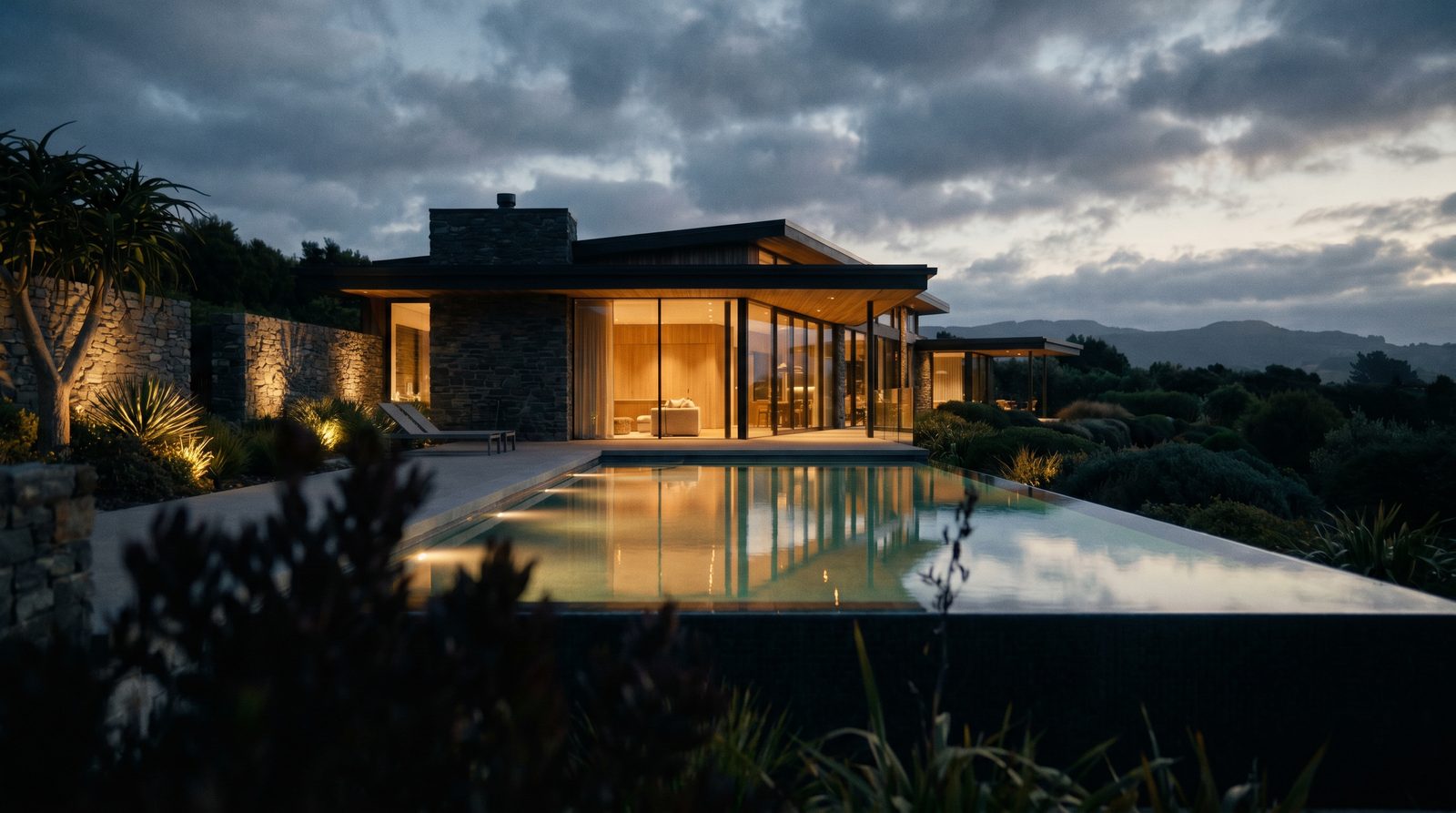
A high-quality architectural animation converts pre-sales buyers because it controls exactly what they see and feel: purposeful camera moves that reveal space progressively, physically accurate lighting that reads as real, and interior detail calibrated to the buyer's decision stage. A forgettable flythrough fails on at least one of those three. Developers can tell the difference before ordering by reviewing a studio's camera choreography and lighting in past work — not just polygon counts.
Ratio Visuals' take: The single mistake we see most often is developers approving a storyboard that front-loads the exterior and rushes the interior. Buyers spend more time deciding in a living room than in a lobby. If your animation script gives the kitchen fifteen seconds and the façade forty-five, you have the emphasis backwards for a residential pre-sale.
What Is the Difference Between a Good and a Bad Architectural Animation?
A good architectural animation is distinguished by intentional storytelling, physically based rendering (PBR) materials, and camera motion that feels like a cinematographer — not a drone on autopilot. A bad one is technically rendered but emotionally inert: uniform lighting, mechanical panning, and no sense of how a human would actually move through the space.
The gap is rarely about software. Both a high-converting animation and a generic flythrough can be rendered in the same engine. The difference is in pre-production decisions: the shot list, the time-of-day lighting, the material library, and whether the studio understands what the buyer needs to believe before they sign. Studios that skip storyboarding almost always produce generic results.
- Storytelling structure: Arrival → entry → key living spaces → hero amenity → closing exterior. Each cut should answer a buyer question.
- Camera motion: Smooth, motivated moves (dolly, crane, walk-through) rather than orbit or spin.
- Lighting: Global illumination, soft shadows, and a chosen time of day — not a neutral midday default.
- Material realism: PBR textures with correct roughness and reflectance, not flat shaders.
- People and entourage: Believable human scale and activity, not stiff stock figures.
- Sound design: Ambient audio that matches the environment (optional but impactful for sales presentations).
See how animation compares to still renders as a marketing tool in our guide to architectural animation vs still renders.
Which Camera Moves Actually Sell a Development?
The camera moves that convert buyers in architectural animation are slow dolly-ins to hero spaces, low-angle walk-throughs that give a sense of ceiling height, and deliberate reveals — where a wall or doorframe masks the destination until the viewer is almost there. Orbit shots and fast pans feel mechanical and are rarely the right choice for residential marketing.
In our exterior work, a low-angle push toward the entrance at dusk — with warm interior light spilling through glazing — consistently reads as more aspirational than a high aerial circling the roof. The aerial has its place for site context, but it does not sell the feeling of living there.
Camera moves by use case
| Move | Best for | Avoid when |
|---|---|---|
| Slow dolly-in (exterior) | Arrival sequence, façade reveal | Tight urban sites with no approach depth |
| Walk-through (interior) | Living spaces, kitchen, primary suite | Narrow corridors without destination payoff |
| Low crane / pedestal rise | Lobby, double-height spaces, rooftop amenity | Low-ceiling spaces where it reads as cramped |
| Aerial orbit | Site context, masterplan, proximity to landmarks | Residential close-ups — depersonalises the space |
| Reveal (masked by architecture) | Pool, view, hero amenity | When the payoff space is not yet fully detailed |
How Does Lighting Affect the Quality of a Walkthrough Animation?
Lighting is the single largest quality differentiator in architectural animation. Global illumination — where light bounces between surfaces as it does in reality — produces the soft, layered look buyers associate with photography. Flat, uniform lighting (common in rushed productions) makes even accurate geometry look like a video game cutscene.
Time-of-day choice matters as much as technique. Dusk animations with warm interior light balanced against a blue-hour sky consistently outperform midday versions for luxury residential marketing, because the contrast reads as "home" rather than "building." For commercial or mixed-use projects, a bright morning light with long shadows communicates energy and activity. The studio should propose a lighting mood in the storyboard, not default to noon.
Lighting checklist for reviewing a studio's demo reel
- Do shadows have soft penumbra edges, or are they hard and uniform?
- Does interior light spill correctly through windows into the exterior scene?
- Are reflective surfaces (glass, polished stone, water) showing realistic environment maps?
- Does the sky read as photographic — gradient, clouds, atmospheric haze — or flat?
- Are there secondary light sources (lamps, sconces, landscape lighting) that add depth?
What Level of Interior Detail Should a Marketing Animation Include?
A marketing animation for pre-sales should show finishes at the level of a furnished model unit: cabinetry profiles, countertop materials, flooring pattern, and key fixtures visible and identifiable. Furniture should be to-scale and styled for the target buyer. Decorative objects and soft furnishings add realism but are secondary to material accuracy.
The detail level should match the decision the buyer is being asked to make. Early-stage investor presentations can work with schematic interiors. Buyer-facing pre-sale animations — the ones that drive deposits — need enough finish detail that a buyer can see their life in the space. That means correct tile grout lines, visible hardware, and window treatments, not placeholder boxes.
For a deeper look at how interior finish accuracy affects perceived value, see our work on architectural animation services.
Interior detail by project stage
| Project stage | Minimum interior detail | Recommended additions |
|---|---|---|
| Investor / entitlement | Massing, basic material blocking | Indicative furniture layout |
| Pre-sales launch | Full finish specification, furniture, fixtures | Decorative objects, art, soft furnishings |
| Active sales / leasing | Full finish + lifestyle entourage | Multiple finish packages shown |
| Amenity marketing | Full FF&E, people, activity | Sound design, day/night version |
How Long Should an Architectural Animation Be for Pre-Sales?
A pre-sales architectural animation should run between 90 seconds and three minutes for a residential development. Shorter than 90 seconds rarely covers enough space to build confidence; longer than three minutes loses attention in a sales gallery or website autoplay context. For social media cuts, a 30–45 second highlight version should be planned from the same render pass.
The right length is determined by the number of spaces that need to be shown, not by a fixed rule. A single-building condo with one floor plan and one amenity deck can be compelling at 90 seconds. A mixed-use masterplan with residential, retail, and shared amenities may need two and a half minutes to cover the story without rushing. Plan the shot list first; the duration follows from it.
What Files and Inputs Does a Studio Need to Produce a Quality Animation?
To produce a high-quality architectural animation, a studio needs architectural drawings (floor plans, elevations, sections), a finish and material specification, a site survey or context model, and a clear brief on the target buyer and marketing goal. The more complete the inputs, the less revision the animation requires — and the more accurate the result will be to the real building.
Common gaps that delay production or force expensive revisions include: no confirmed finish palette, missing furniture specifications, no site context data (neighbouring buildings, landscaping, street level), and no approved storyboard before rendering begins. Studios that start rendering without a signed-off storyboard almost always produce work that requires structural changes — which is the most expensive kind of revision.
- Required: Architectural drawings (CAD, Revit, SketchUp, or PDF), finish schedule, site plan
- Strongly recommended: FF&E specification, brand/lifestyle reference images, approved storyboard
- Helpful: Existing renders or physical samples for material matching, competitor marketing for positioning context
- For exterior: Site survey, neighbouring building heights, landscape plan, sun orientation
Our rendering turnaround time guide explains how input completeness directly affects delivery speed.
How Do You Review and Approve an Animation Before Final Delivery?
Review an architectural animation in two stages: a low-resolution preview (often called a "draft render" or "animatic") to approve camera moves, timing, and composition; then a full-resolution render for final colour, lighting, and material review. Approving camera moves at full resolution is expensive — changes at that stage require re-rendering entire sequences.
When reviewing, watch the animatic at least twice: once for story flow (does it tell the right sequence?) and once for camera motion (does each move feel motivated?). Mark timestamps for every note rather than describing scenes in words — "at 1:14 the camera clips the ceiling" is actionable; "the kitchen section feels off" is not.
Revision checklist before signing off
- Does the sequence open with a strong exterior arrival shot?
- Are all key selling spaces shown — primary suite, kitchen, hero amenity?
- Do the finish materials match the approved specification?
- Is the lighting mood consistent with the project's brand positioning?
- Are there any geometry errors, clipping issues, or floating objects?
- Does the animation end on a memorable, brand-appropriate frame?
Frequently Asked Questions
How do I know if a studio can produce a high-quality architectural animation before I hire them?
Ask to see three recent animation samples with similar project types — residential, commercial, or mixed-use — and review them specifically for lighting quality, camera motivation, and material realism. A studio confident in its work will also show you a storyboard from a past project so you can see how they plan before they render.
What is the most common reason architectural animations look cheap or unconvincing?
Flat, uniform lighting is the most common cause. When a studio defaults to a neutral midday sky without global illumination or a deliberate time-of-day choice, the result looks like a real-time game engine rather than a photoreal production. Poor material textures — especially flat glass and generic wood — are the second most frequent issue.
Should I order a 3D animation or still renders first for a pre-sales campaign?
For most pre-sales campaigns, still renders should come first. They are faster to produce, easier to revise, and cover the majority of marketing uses — listings, brochures, social media, investor decks. Animation is most valuable once the design is locked and the sales gallery or website needs a hero experience. Our guide to animation vs still renders covers when each is the right call.
How many revision rounds are standard for an architectural animation?
Most professional studios include two revision rounds: one at the animatic (draft) stage for camera and timing, and one at the full-resolution stage for materials and lighting. Structural changes — adding or removing shots, changing the sequence order — after full-resolution rendering has begun are typically out of scope and incur additional cost.
What file format should the final animation be delivered in?
For marketing use, request an H.264 or H.265 MP4 at 1080p minimum (4K if the animation will be shown on large displays or in a sales gallery). Ask for a ProRes or lossless master file if you anticipate re-editing or colour grading. Also confirm whether the studio delivers individual frame sequences — useful if you need to extract still frames for print without re-rendering.
Ready to brief a production? Contact Ratio Visuals to discuss your project's camera plan, finish schedule, and delivery timeline.
Last updated: November 2026